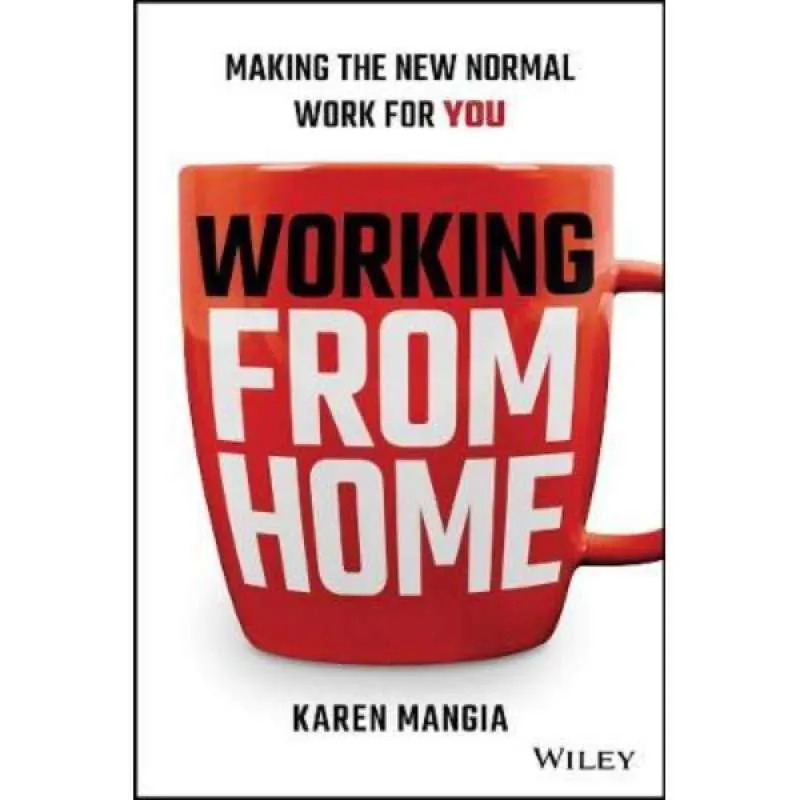
Summary Working From Home by Karen Mangia pdf
Quotes from Working From Home by Karen Mangia pdf
review Working From Home by Karen Mangia pdf
Book summary: Working From Home
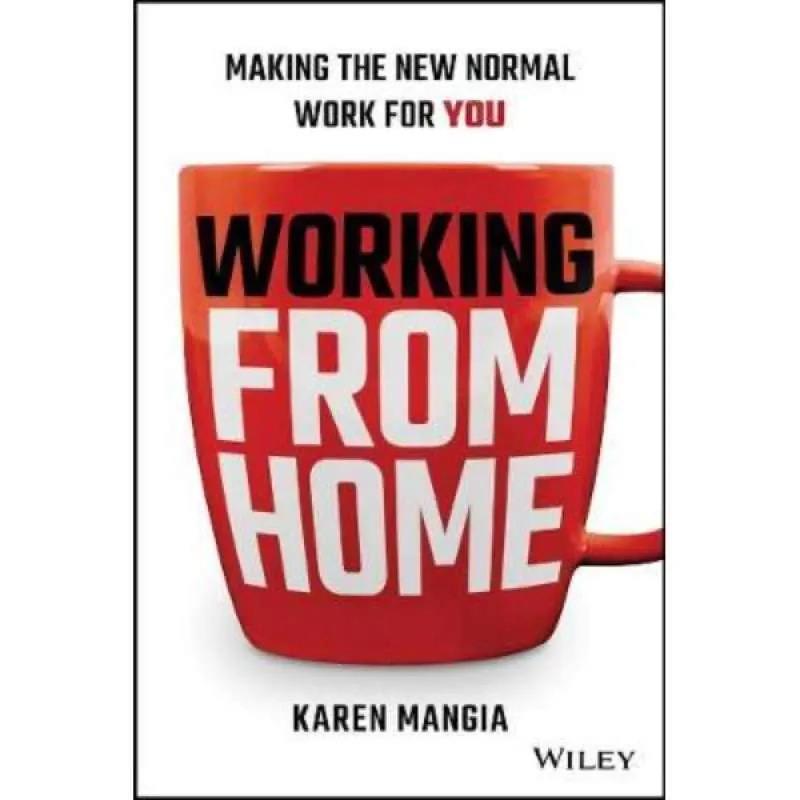
Written as remote work changed from an occasional benefit into a widespread reality, Working From Home treats it as a skill to design rather than a temporary inconvenience. Karen Mangia argues that moving a laptop into the house does not automatically create a functioning workday. Home contains cues for rest and family responsibilities, while a traditional office provides boundaries, information, and relationships that often happen without planning. Remote workers must deliberately rebuild three things: a space that supports attention, a schedule with a recognizable beginning and end, and a communication system that makes work visible without physical presence.
Mangia begins with space and equipment, but she does not require an expensive private office. The goal is a location that is as consistent as circumstances allow, with adequate sound, light, connection, and physical comfort. Small setup rituals—clearing the surface, closing distracting applications, and naming the first task—replace part of the psychological transition created by commuting. In a shared home, agreements about signals, quiet periods, and acceptable interruptions are more useful than demanding perfect silence. A workable environment is one that reduces friction, not one that looks impressive on a video call.
Time management has two opposite failure modes: constant distraction and work that never ends. Flexibility does not mean being reachable every minute. The book suggests blocks for focus, meetings, and short administrative tasks, with deliberate breaks for movement and meals. A visible closing ritual should mark the end of the day. More importantly, employees and managers need explicit agreements about outcomes and response times. When expectations are unclear, workers stay online to prove effort. Healthy remote productivity measures completed value rather than the number of hours a status indicator remains green.
Communication and career visibility receive equal attention. Offices transmit information through corridors and casual conversation; distributed teams must document decisions, summarize progress, ask for feedback, and choose channels carefully. Every question does not require a video meeting. Asynchronous writing works for information, while a call is better for ambiguity, conflict, or emotional nuance. Remote employees must also build relationships intentionally and explain the impact of their work with evidence. Waiting to be noticed by accident is especially risky when managers and colleagues cannot see the daily process.
The final lesson is that successful remote work is a shared responsibility. An employee cannot single-handedly repair a culture that rewards constant availability, while a flexible policy cannot help someone who ignores boundaries and communication. Some examples are clearly shaped by the emergency atmosphere of 2020, and several recommendations now sound familiar after years of hybrid work. The foundation remains useful: design the environment, negotiate expectations, protect energy, and make information and results visible without turning the entire day into meetings.
A clearer view of “Working From Home” emerges when the summary is organized around four connected themes: «Design boundaries», «Agree on outcomes», «Document communication», «Protect professional visibility». In theme 1, A consistent place and opening and closing rituals keep work from occupying the whole day. In theme 2, Clear deliverables and response windows are better than monitoring continuous presence. In theme 3, Written decisions and progress replace much of the context once carried by office conversations. In theme 4, Show impact, request feedback, and build relationships intentionally. These themes are not isolated rules. They are lenses for understanding the argument, the characters’ movement, and the consequences the work asks readers to consider. While reading, it helps to record the central claim in each part, the example supporting it, and the question still unanswered, then compare those notes with personal experience or an independent source whenever historical or scientific facts are involved. This prevents an attractive phrase from becoming a universal truth and separates what the author actually states from what the reader infers. With a practical nonfiction book, one idea can be tested for a week, with results and obstacles recorded before the method is adjusted; trying everything at once makes evaluation impossible. With fiction, the equivalent test is to track changes in character, the narrator’s reliability, and whether the ending answers the tensions the plot created. A final three-sentence note—main insight, strongest objection, and one action or question worth pursuing—makes the reading easier to retain without exaggerating the book’s promises or dismissing its value. The book then becomes the beginning of a revisable conversation shaped by context, goals, and edition, not a closed recipe or a collection of quotations.
Book and author information
Author: Karen Mangia, a business leader and writer on employee experience and flexible work.
Full title: Working From Home: Making the New Normal Work for You.
Publication: Wiley, 2020.
Length: 192 pages in the English edition.
Key ideas
Design boundaries
A consistent place and opening and closing rituals keep work from occupying the whole day.
Agree on outcomes
Clear deliverables and response windows are better than monitoring continuous presence.
Document communication
Written decisions and progress replace much of the context once carried by office conversations.
Protect professional visibility
Show impact, request feedback, and build relationships intentionally.
Review and rating
Editorial rating: 4.0 / 5.
This is a clear, usable guide for new remote workers and managers of distributed teams. It balances productivity, well-being, and visibility rather than reducing remote work to software and equipment.
Some examples are tied to the shock of 2020, and the book could say more about unequal housing, income, and caregiving conditions. Several of its best solutions also require management cooperation, not just employee discipline.
Frequently asked questions
1. Do I need a separate home office?
No. A recognizable and repeatable space can work if boundaries are clear.
2. How do I stop working all day?
Set an end time, use a closing ritual, and disable nonessential notifications after work.
3. How can I prove productivity?
Agree on measurable outcomes and share short, regular progress summaries.
4. Should every conversation be a video call?
No. Use writing for information and calls for ambiguity, conflict, or sensitive topics.
5. Is the book useful for managers?
Yes. It addresses trust, expectations, communication norms, and distributed team culture.
"Working From Home by Karen Mangia pdf": If it appears on the site in a way that violates copyright, please contact us immediately via the contact form or email to have it removed immediately out of respect for intellectual property rights. Call us: contact@market-books.com
Share the book with your friends


Working From Home by Karen Mangia pdf
Working From Home by Karen Mangia pdf مترجم
Working From Home by Karen Mangia pdf in french
Working From Home by Karen Mangia pdf en france
Working From Home by Karen Mangia pdf en français
Working From Home by Karen Mangia pdf بالفرنسية
Working From Home by Karen Mangia pdf in English
Working From Home by Karen Mangia pdf en anglais
Working From Home by Karen Mangia pdf بالإنجليزية
Working From Home by Karen Mangia pdf in Arabic
Working From Home by Karen Mangia pdf en arabe
Working From Home by Karen Mangia pdf بالعربية
Working From Home by Karen Mangia pdf in Arabic
Working From Home by Karen Mangia pdf in English
Working From Home by Karen Mangia pdf in french
Working From Home by Karen Mangia pdf in french For free
Working From Home by Karen Mangia pdf en france For free
Working From Home by Karen Mangia pdf en français For free
Working From Home by Karen Mangia pdf بالفرنسية For free
Working From Home by Karen Mangia pdf in English For free
Working From Home by Karen Mangia pdf en anglais For free
Working From Home by Karen Mangia pdf بالإنجليزية For free
Working From Home by Karen Mangia pdf in Arabic For free
Working From Home by Karen Mangia pdf en arabe For free
Working From Home by Karen Mangia pdf بالعربية For free
Working From Home by Karen Mangia pdf in Arabic For free
Working From Home by Karen Mangia pdf in English For free
Working From Home by Karen Mangia pdf in french For free
Books in the same category


Download a book Secrets of the Millionaire Mind pdf

Download a book Pharaohs thieves of civilization pdf

Download a book Act Like a Success Think Like a Success pdf

Download a book The Power of Your Subconscious pdf

Download a book Staying Strong: 365 Days a Year pdf

Download a book The Subtle Art of Not Giving a F*ck pdf




Download a book How to Sell Anything to Anybody pdf







Download the book Full of Emptiness in PDF format

Download the book I Loved and Tomorrow in PDF format

Download the book Know Your Other Face in PDF format













Never Again Will I Be Defeated PDF – Abdullah Mohammed Al-Turki