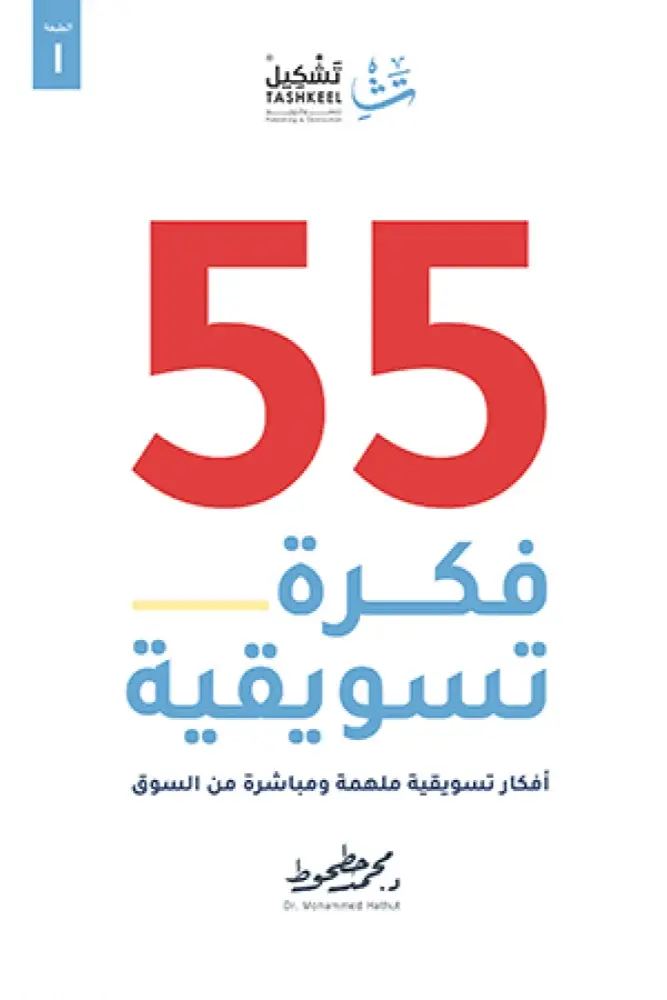
Summary 55 Marketing Ideas by Mohammed Hathout pdf
Quotes from 55 Marketing Ideas by Mohammed Hathout pdf
review 55 Marketing Ideas by Mohammed Hathout pdf
Book summary: 55 Marketing Ideas
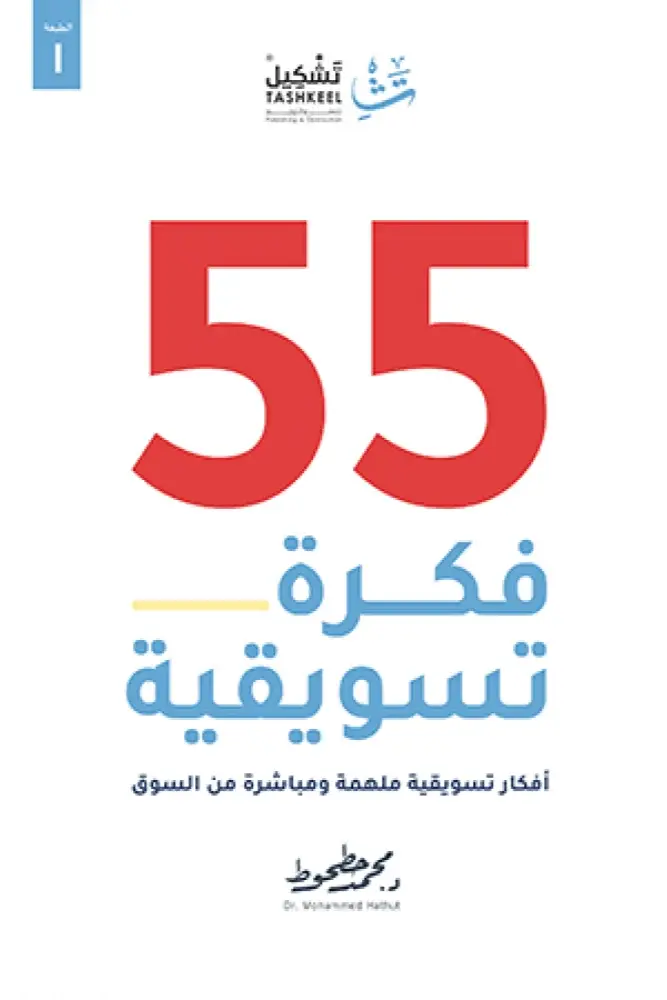
Dr. Mohammed Hathout collects fifty-five short observations and market cases instead of building one continuous theory. That structure is the book’s main advantage: an owner or marketer can read one idea and ask where it appears in a particular business. Marketing is not a social post added after a product is complete. It is a way of understanding the customer, value, price, channel, and experience. The cases emphasize execution: what a company did, why it worked or failed under those conditions, and which part can be adapted rather than copied literally into a different market.
Customer understanding receives sustained attention. Age and gender alone rarely create a useful segment. Marketers need the problem, context, motivation, obstacle, and language people use to describe a need. Conversations, objections, and observation reveal opportunities that broad reports miss. The offer must then answer three questions clearly: what benefit, for whom, and why should it be believed? Technical features do not rescue a vague promise. Social proof, trials, testimonials, and understandable guarantees can reduce perceived risk, provided they are real and do not become misleading claims.
Pricing and promotion are treated as strategic decisions. Price signals position and quality; repeated discounts train customers to wait and can damage margin and trust. A stronger offer does not always mean a lower price. It may combine service, convenience, speed, or reduced risk. Promotion begins by choosing the channel where the audience actually pays attention and shaping a message for that context. Micro-influencers may have stronger relationships with a niche, but follower totals are not sales. Codes, visits, orders, repeat behavior, cost, and contribution must be measured.
Experience and retention appear throughout the cases. Acquiring a new customer is expensive, so response time, ordering ease, packaging, follow-up, and complaint handling affect profitability as much as advertising. A loyalty scheme cannot repair a disappointing product. Data should serve a defined decision: source, conversion, average order, repeat rate, and margin. Too many dashboards can create a false feeling of control. A few indicators tied to an experiment are better than counting everything.
The book works as an idea bank and meeting resource rather than a complete marketing curriculum. Some platforms and examples age quickly, and no tactic transfers unchanged between sectors or countries. The best method is to choose one idea, write a hypothesis, define a metric and time period, and test it at small scale. No campaign can permanently save a weak offer. Sustainable marketing begins with real value that customers understand quickly, encounter in the right place, and experience consistently after purchase.
A clearer view of “55 Marketing Ideas” emerges when the summary is organized around four connected themes: «Start with the problem», «Price is positioning», «Measure impact, not noise», «Test one idea». In theme 1, Understand customer need and context before choosing a message and channel. In theme 2, Repeated discounts change expectations and can damage both margin and value. In theme 3, Followers and likes do not replace orders, repeat behavior, cost, and profit. In theme 4, Turn inspiration into a hypothesis, metric, and small experiment. These themes are not isolated rules. They are lenses for understanding the argument, the characters’ movement, and the consequences the work asks readers to consider. While reading, it helps to record the central claim in each part, the example supporting it, and the question still unanswered, then compare those notes with personal experience or an independent source whenever historical or scientific facts are involved. This prevents an attractive phrase from becoming a universal truth and separates what the author actually states from what the reader infers. With a practical nonfiction book, one idea can be tested for a week, with results and obstacles recorded before the method is adjusted; trying everything at once makes evaluation impossible. With fiction, the equivalent test is to track changes in character, the narrator’s reliability, and whether the ending answers the tensions the plot created. A final three-sentence note—main insight, strongest objection, and one action or question worth pursuing—makes the reading easier to retain without exaggerating the book’s promises or dismissing its value. The book then becomes the beginning of a revisable conversation shaped by context, goals, and edition, not a closed recipe or a collection of quotations.
Book and author information
Author: Dr. Mohammed Hathout, a marketing writer and practitioner.
Original Arabic title: 55 فكرة تسويقية: أفكار تسويقية ملهمة ومباشرة من السوق.
Publication: Dar Tashkeel, 2021 for the widely listed early edition; later editions followed.
Length: 170 pages in the 2021 edition and about 172 pages in later listings.
Key ideas
Start with the problem
Understand customer need and context before choosing a message and channel.
Price is positioning
Repeated discounts change expectations and can damage both margin and value.
Measure impact, not noise
Followers and likes do not replace orders, repeat behavior, cost, and profit.
Test one idea
Turn inspiration into a hypothesis, metric, and small experiment.
Review and rating
Editorial rating: 4.1 / 5.
The book is direct and useful for readers who want quick cases or short topics for marketing discussions, with examples close to Arab markets.
Its fragmented structure is not a full curriculum, and some tactics age faster than the principles. Readers must connect each idea to their strategy and data.
Frequently asked questions
1. Is it suitable for beginners?
Yes, although a structured fundamentals textbook is a useful companion.
2. Are the ideas limited to Saudi Arabia?
Some examples are local, while customer, value, and measurement principles can be adapted.
3. Are micro-influencers always better?
No. Audience fit, credibility, and measured outcomes matter more.
4. Which metric should I watch first?
Choose one tied to the goal, such as acquisition cost or repeat-purchase rate.
5. How should I use the book?
Test one idea with a clear period and metric, then retain only what proves useful.
"55 Marketing Ideas by Mohammed Hathout pdf": If it appears on the site in a way that violates copyright, please contact us immediately via the contact form or email to have it removed immediately out of respect for intellectual property rights. Call us: contact@market-books.com
Share the book with your friends


55 Marketing Ideas by Mohammed Hathout pdf
55 Marketing Ideas by Mohammed Hathout pdf مترجم
55 Marketing Ideas by Mohammed Hathout pdf in french
55 Marketing Ideas by Mohammed Hathout pdf en france
55 Marketing Ideas by Mohammed Hathout pdf en français
55 Marketing Ideas by Mohammed Hathout pdf بالفرنسية
55 Marketing Ideas by Mohammed Hathout pdf in English
55 Marketing Ideas by Mohammed Hathout pdf en anglais
55 Marketing Ideas by Mohammed Hathout pdf بالإنجليزية
55 Marketing Ideas by Mohammed Hathout pdf in Arabic
55 Marketing Ideas by Mohammed Hathout pdf en arabe
55 Marketing Ideas by Mohammed Hathout pdf بالعربية
55 Marketing Ideas by Mohammed Hathout pdf in Arabic
55 Marketing Ideas by Mohammed Hathout pdf in English
55 Marketing Ideas by Mohammed Hathout pdf in french
55 Marketing Ideas by Mohammed Hathout pdf in french For free
55 Marketing Ideas by Mohammed Hathout pdf en france For free
55 Marketing Ideas by Mohammed Hathout pdf en français For free
55 Marketing Ideas by Mohammed Hathout pdf بالفرنسية For free
55 Marketing Ideas by Mohammed Hathout pdf in English For free
55 Marketing Ideas by Mohammed Hathout pdf en anglais For free
55 Marketing Ideas by Mohammed Hathout pdf بالإنجليزية For free
55 Marketing Ideas by Mohammed Hathout pdf in Arabic For free
55 Marketing Ideas by Mohammed Hathout pdf en arabe For free
55 Marketing Ideas by Mohammed Hathout pdf بالعربية For free
55 Marketing Ideas by Mohammed Hathout pdf in Arabic For free
55 Marketing Ideas by Mohammed Hathout pdf in English For free
55 Marketing Ideas by Mohammed Hathout pdf in french For free
Books in the same category


Download a book Secrets of the Millionaire Mind pdf

Download a book Pharaohs thieves of civilization pdf




Download a book Act Like a Success Think Like a Success pdf



Download a book The Power of Your Subconscious pdf

Download a book Staying Strong: 365 Days a Year pdf




Download a book The Subtle Art of Not Giving a F*ck pdf





Download a book How to Sell Anything to Anybody pdf











Download the book Full of Emptiness in PDF format

Download the book I Loved and Tomorrow in PDF format

Download the book Know Your Other Face in PDF format














Never Again Will I Be Defeated PDF – Abdullah Mohammed Al-Turki