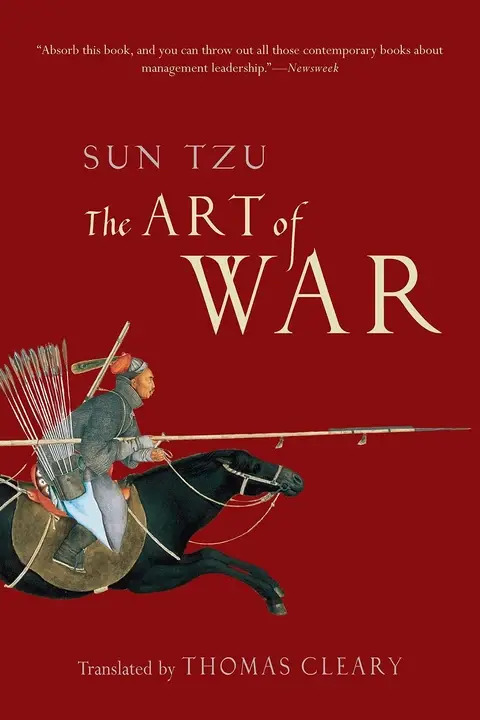
Summary The Art of War by Sun Tzu PDF
Quotes from The Art of War by Sun Tzu PDF
review The Art of War by Sun Tzu PDF
Book summary: The Art of War
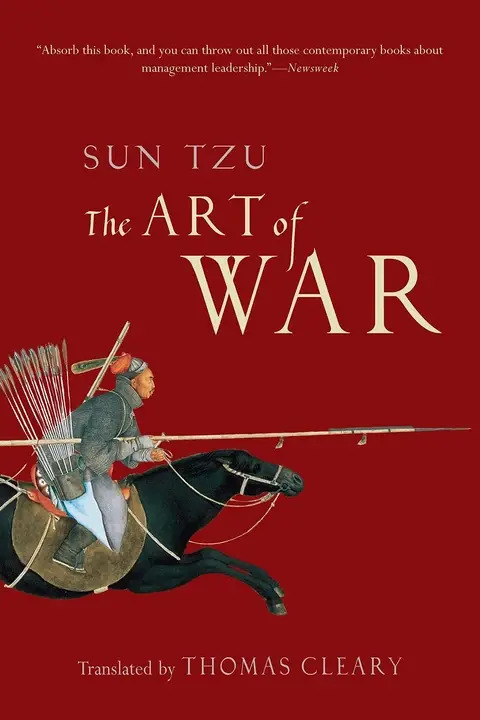
Traditionally attributed to Sun Tzu, The Art of War is an ancient Chinese text in thirteen chapters about achieving a result at the lowest possible cost. It begins with assessment before combat: political purpose, quality of command, discipline, terrain, weather, and resources. A good commander does not enter war because bravery urges action; capabilities and costs are compared and favorable conditions created. The best victory breaks an opponent’s plan or alliances before destroying armies and cities, because a long war exhausts even the winner.
Deception manages what the opponent knows: appear distant when near, conceal strength, and encourage a bad decision. The famous maxim does not mean lying in every relationship. Its context is military conflict, where information forms part of force. Knowledge must flow inward too: know self and opponent rather than trusting a desired image. The final chapter’s focus on spies and local intelligence follows naturally. A brilliant plan built on false information becomes organized danger.
Sun Tzu distinguishes direct and indirect force and stability from adaptation. A formation that succeeded yesterday may fail after terrain, morale, or supply changes. An army should behave like water, taking the shape of its path, avoiding hardness, and striking emptiness. Chapters address maneuver, roads, heights, rivers, terrain, and nine situations. Orders do not work without training, trust, and consistency. Random cruelty is not leadership; discipline requires clarity, fairness, and knowledge of troops.
Chapters on fire attack and espionage remind readers this is a real military work, not a collection of pleasant business metaphors. Civilian application needs restraint. A competitor is not an enemy to destroy, workers are not soldiers, and deception may break law and trust. Context analysis, avoidance of unnecessary conflict, resource protection, option creation, and refusal to decide in anger can transfer safely. Carrying the entire language of war into ordinary life produces hostility and damages relationships.
The work is brief and compressed, so meaning shifts with translation, commentary, and historical school. Sun Tzu’s identity and exact composition date remain debated, and the text may have developed through an old textual tradition. A strong edition explains terms and context rather than presenting detached slogans. Its durable value places thought before engagement, information before confidence, and flexibility before rigidity. Ethical and historical limits require one recurring question: is this truly a war, and what damage will the claimed victory create?
A clearer view of “The Art of War” emerges when the summary is organized around four connected themes: «Calculate before conflict», «Attack the plan», «Become like water», «Information is power». In theme 1, Purpose, resources, terrain, and intelligence precede enthusiasm. In theme 2, The strongest outcome minimizes destruction and cost. In theme 3, Form adapts to conditions instead of hardening into one rule. In theme 4, Knowing self, opponent, and context prevents decisions based on fantasy. These themes are not isolated rules. They are lenses for understanding the argument, the characters’ movement, and the consequences the work asks readers to consider. While reading, it helps to record the central claim in each part, the example supporting it, and the question still unanswered, then compare those notes with personal experience or an independent source whenever historical or scientific facts are involved. This prevents an attractive phrase from becoming a universal truth and separates what the author actually states from what the reader infers. With a practical nonfiction book, one idea can be tested for a week, with results and obstacles recorded before the method is adjusted; trying everything at once makes evaluation impossible. With fiction, the equivalent test is to track changes in character, the narrator’s reliability, and whether the ending answers the tensions the plot created. A final three-sentence note—main insight, strongest objection, and one action or question worth pursuing—makes the reading easier to retain without exaggerating the book’s promises or dismissing its value. The book then becomes the beginning of a revisable conversation shaped by context, goals, and edition, not a closed recipe or a collection of quotations.
Book and author information
Traditional author: Sun Tzu, an ancient Chinese military strategist.
Composition: probably late Spring and Autumn or Warring States period; exact dating is debated.
Structure: thirteen chapters on planning, operations, maneuver, terrain, and intelligence.
Length: varies widely; Thomas Cleary’s annotated 2019 edition is 256 pages.
Key ideas
Calculate before conflict
Purpose, resources, terrain, and intelligence precede enthusiasm.
Attack the plan
The strongest outcome minimizes destruction and cost.
Become like water
Form adapts to conditions instead of hardening into one rule.
Information is power
Knowing self, opponent, and context prevents decisions based on fantasy.
Review and rating
Editorial rating: 4.6 / 5.
A highly compressed strategy text that remains useful for thinking about cost, intelligence, and adaptation.
Business quotations often remove its military context; civilian use requires commentary and ethical limits.
Frequently asked questions
1. How many chapters are there?
Thirteen connected chapters on strategy, operations, and intelligence.
2. Did Sun Tzu certainly write it?
It is traditionally attributed to him, but exact date and textual formation remain debated.
3. Does it always encourage war?
No. It favors low-cost victory and warns against prolonged conflict.
4. Can it be applied to business?
Analysis and adaptation can transfer; literal military deception and hostility should not.
5. Which edition should I choose?
An annotated translation explaining terms, context, and textual differences.
"The Art of War by Sun Tzu PDF ": If it appears on the site in a way that violates copyright, please contact us immediately via the contact form or email to have it removed immediately out of respect for intellectual property rights. Call us: contact@market-books.com
Share the book with your friends


The Art of War by Sun Tzu PDF
The Art of War by Sun Tzu PDF مترجم
The Art of War by Sun Tzu PDF in french
The Art of War by Sun Tzu PDF en france
The Art of War by Sun Tzu PDF en français
The Art of War by Sun Tzu PDF بالفرنسية
The Art of War by Sun Tzu PDF in English
The Art of War by Sun Tzu PDF en anglais
The Art of War by Sun Tzu PDF بالإنجليزية
The Art of War by Sun Tzu PDF in Arabic
The Art of War by Sun Tzu PDF en arabe
The Art of War by Sun Tzu PDF بالعربية
The Art of War by Sun Tzu PDF in Arabic
The Art of War by Sun Tzu PDF in English
The Art of War by Sun Tzu PDF in french
The Art of War by Sun Tzu PDF in french For free
The Art of War by Sun Tzu PDF en france For free
The Art of War by Sun Tzu PDF en français For free
The Art of War by Sun Tzu PDF بالفرنسية For free
The Art of War by Sun Tzu PDF in English For free
The Art of War by Sun Tzu PDF en anglais For free
The Art of War by Sun Tzu PDF بالإنجليزية For free
The Art of War by Sun Tzu PDF in Arabic For free
The Art of War by Sun Tzu PDF en arabe For free
The Art of War by Sun Tzu PDF بالعربية For free
The Art of War by Sun Tzu PDF in Arabic For free
The Art of War by Sun Tzu PDF in English For free
The Art of War by Sun Tzu PDF in french For free
Books in the same category

Download a book Secrets of the Millionaire Mind pdf

Download a book Pharaohs thieves of civilization pdf


Download a book Act Like a Success Think Like a Success pdf

Download a book The Power of Your Subconscious pdf

Download a book Staying Strong: 365 Days a Year pdf

Download a book The Subtle Art of Not Giving a F*ck pdf


Download a book How to Sell Anything to Anybody pdf






Download the book Full of Emptiness in PDF format

Download the book I Loved and Tomorrow in PDF format

Download the book Know Your Other Face in PDF format









Never Again Will I Be Defeated PDF – Abdullah Mohammed Al-Turki