Summary The First 20 Hours pdf
Quotes from The First 20 Hours pdf
review The First 20 Hours pdf
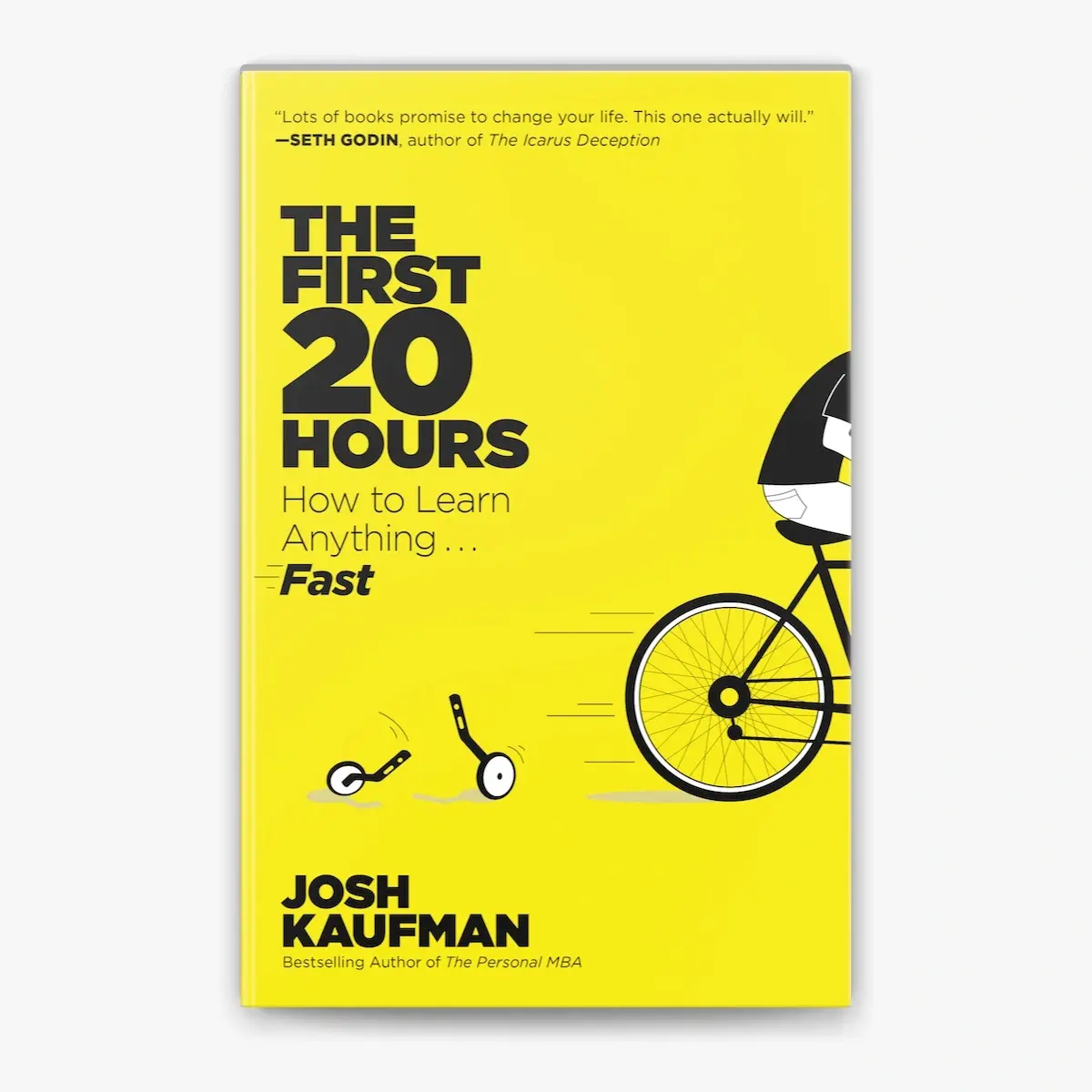
Book summary: The First 20 Hours
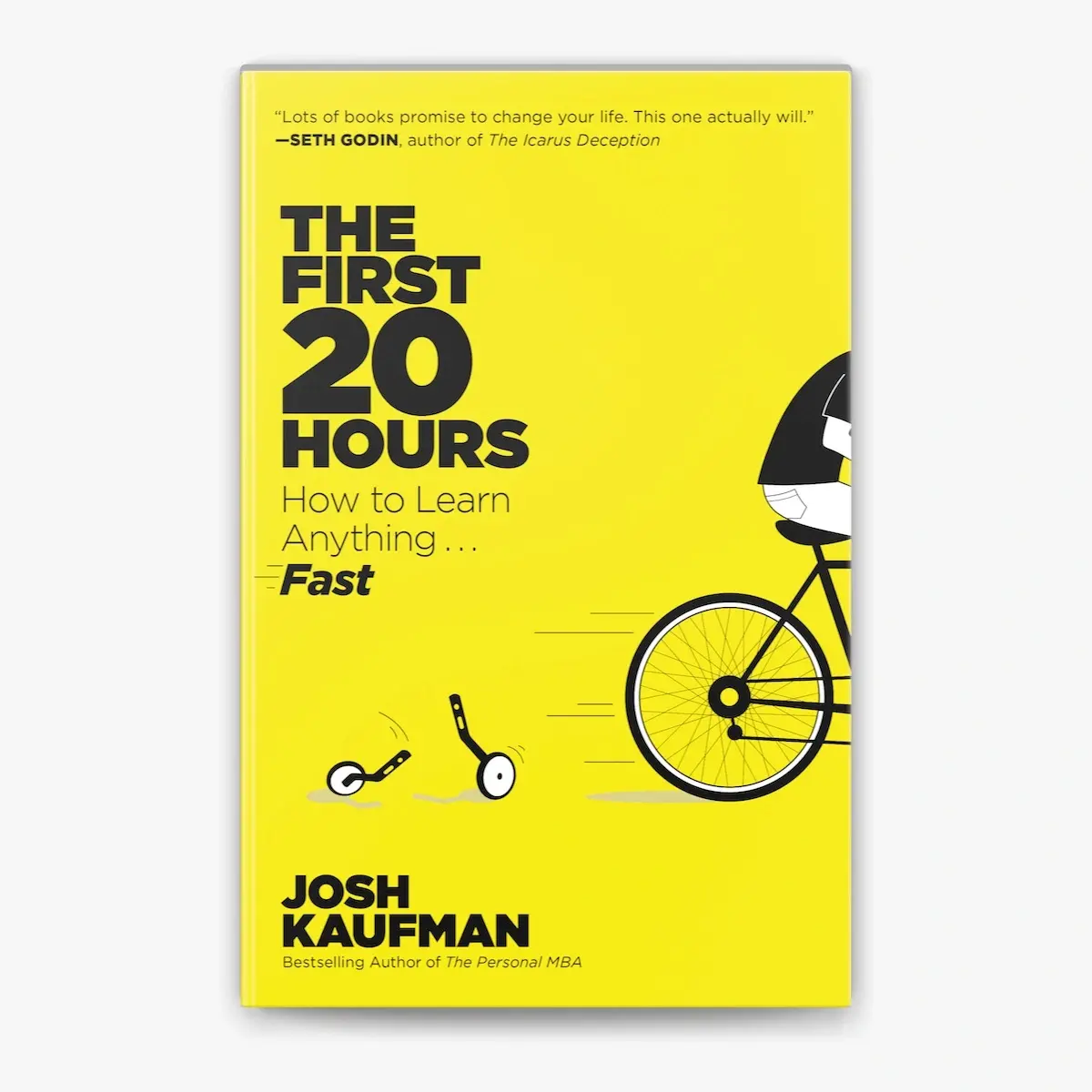
Josh Kaufman distinguishes reaching a useful, enjoyable level in a new skill from achieving world-class expertise. The ten-thousand-hour idea concerns elite performance and does not mean beginners need years before playing a song, holding a basic conversation, or using a tool. Roughly twenty hours of focused practice can often carry someone beyond initial helplessness into visible competence, provided those hours involve deliberate attempts. Twenty is not a scientific law for every skill. It is a commitment small enough to begin and large enough for real learning to become noticeable.
The method starts with a concrete target performance. “Learn Spanish” is vague, while “hold a ten-minute travel conversation” identifies situations and vocabulary. The skill is then decomposed into subskills and ranked by importance. On guitar, changing among a few chords may matter more than mastering all theory; in programming, building one small page may teach more than memorizing a reference. Decomposition prevents the complete curriculum from overwhelming the beginner and makes it legitimate to postpone parts that do not support the current goal.
Next, learn enough to self-correct. Books and tutorials should supply a map, standards, and common errors, then give way to practice. Continuous content consumption can feel like progress while protecting the learner from actually trying. A short feedback loop is essential: perform, observe the result, compare it with the goal, and adjust. Delayed feedback allows errors to repeat. A teacher, friend, recording, or automated test can shorten the loop, but feedback must be specific enough to change the next attempt.
Kaufman emphasizes removing practice barriers before relying on willpower. Prepare equipment, reduce setup steps, reserve time, and move distractions away. Twenty hours might mean forty focused half-hour sessions rather than one exhausting marathon. The beginning is uncomfortable because performance is weak while awareness of mistakes rises quickly. Committing to the hours in advance prevents quitting at the first embarrassment. Track active practice and observable output, not time spent arranging materials or watching someone else.
The author’s examples—yoga, programming, an alternative keyboard, Go, and music—show both the method and its limits. High-risk fields such as medicine or aviation cannot be compressed into twenty hours, and some skills require physical foundations, language, or supervision. The promise is not mastery; it is breaking the beginner barrier. The book is especially valuable for people who collect courses without practicing: choose a precise performance, deconstruct it, obtain feedback, remove friction, and complete twenty genuine hours before judging your ability.
A clearer view of “The First 20 Hours” emerges when the summary is organized around four connected themes: «Define a target performance», «Deconstruct the skill», «Shorten feedback loops», «Remove practice friction». In theme 1, State what you want to do rather than naming a broad field. In theme 2, Begin with the subskills that produce most of the desired result. In theme 3, Perform, observe, compare, and correct quickly. In theme 4, Prepare the tool, schedule, and environment before each session. These themes are not isolated rules. They are lenses for understanding the argument, the characters’ movement, and the consequences the work asks readers to consider. While reading, it helps to record the central claim in each part, the example supporting it, and the question still unanswered, then compare those notes with personal experience or an independent source whenever historical or scientific facts are involved. This prevents an attractive phrase from becoming a universal truth and separates what the author actually states from what the reader infers. With a practical nonfiction book, one idea can be tested for a week, with results and obstacles recorded before the method is adjusted; trying everything at once makes evaluation impossible. With fiction, the equivalent test is to track changes in character, the narrator’s reliability, and whether the ending answers the tensions the plot created. A final three-sentence note—main insight, strongest objection, and one action or question worth pursuing—makes the reading easier to retain without exaggerating the book’s promises or dismissing its value. The book then becomes the beginning of a revisable conversation shaped by context, goals, and edition, not a closed recipe or a collection of quotations.
Book and author information
Author: Josh Kaufman, an independent writer on business and learning.
Full title: The First 20 Hours: How to Learn Anything… Fast!
First published: Portfolio, 2013.
Length: 288 pages in the English paperback edition.
Key ideas
Define a target performance
State what you want to do rather than naming a broad field.
Deconstruct the skill
Begin with the subskills that produce most of the desired result.
Shorten feedback loops
Perform, observe, compare, and correct quickly.
Remove practice friction
Prepare the tool, schedule, and environment before each session.
Review and rating
Editorial rating: 4.2 / 5.
A practical antidote to the belief that learning must take years before it becomes rewarding. The process converts curiosity into practice.
Twenty hours can be misread as a guarantee. Results depend on the goal, prior experience, and feedback, and the number does not represent professional mastery.
Frequently asked questions
1. Can I master anything in twenty hours?
No. The goal is useful beginner competence, not elite expertise or certification.
2. Do tutorials count as practice?
A small amount helps build a map; most hours should involve active performance.
3. How long should each session be?
Focused sessions of thirty to sixty minutes work well for many skills.
4. How do I handle frustration?
Commit in advance, make the task smaller, and record one observable improvement.
5. Does this apply to dangerous skills?
Only as orientation; medicine, aviation, and other high-risk work require supervised formal training.
"The First 20 Hours pdf": If it appears on the site in a way that violates copyright, please contact us immediately via the contact form or email to have it removed immediately out of respect for intellectual property rights. Call us: contact@market-books.com
Share the book with your friends


The First 20 Hours pdf
The First 20 Hours pdf مترجم
The First 20 Hours pdf in french
The First 20 Hours pdf en france
The First 20 Hours pdf en français
The First 20 Hours pdf بالفرنسية
The First 20 Hours pdf in English
The First 20 Hours pdf en anglais
The First 20 Hours pdf بالإنجليزية
The First 20 Hours pdf in Arabic
The First 20 Hours pdf en arabe
The First 20 Hours pdf بالعربية
The First 20 Hours pdf in Arabic
The First 20 Hours pdf in English
The First 20 Hours pdf in french
The First 20 Hours pdf in french For free
The First 20 Hours pdf en france For free
The First 20 Hours pdf en français For free
The First 20 Hours pdf بالفرنسية For free
The First 20 Hours pdf in English For free
The First 20 Hours pdf en anglais For free
The First 20 Hours pdf بالإنجليزية For free
The First 20 Hours pdf in Arabic For free
The First 20 Hours pdf en arabe For free
The First 20 Hours pdf بالعربية For free
The First 20 Hours pdf in Arabic For free
The First 20 Hours pdf in English For free
The First 20 Hours pdf in french For free
Books in the same category

Download a book Secrets of the Millionaire Mind pdf

Download a book Pharaohs thieves of civilization pdf

Download a book Act Like a Success Think Like a Success pdf

Download a book The Power of Your Subconscious pdf

Download a book Staying Strong: 365 Days a Year pdf

Download a book The Subtle Art of Not Giving a F*ck pdf



Download a book How to Sell Anything to Anybody pdf






Download the book Full of Emptiness in PDF format

Download the book I Loved and Tomorrow in PDF format

Download the book Know Your Other Face in PDF format










Never Again Will I Be Defeated PDF – Abdullah Mohammed Al-Turki