Summary The Psychology of Selling pdf
Quotes from The Psychology of Selling pdf
review The Psychology of Selling pdf
The Psychology of Selling Summary
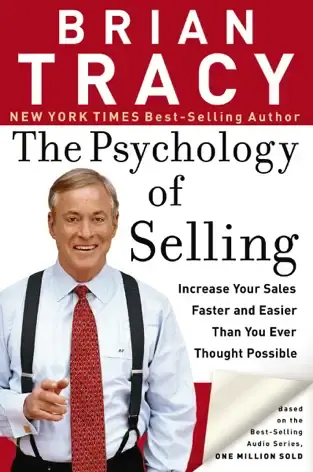
Brian Tracy presents selling as a psychological and behavioral skill that practice can develop, not an inborn gift reserved for outgoing people. Performance begins with the salesperson's self-concept and belief in the value being offered. If every call feels like a verdict on personal worth, expected rejection affects voice and follow-up. Confidence supported by preparation, product knowledge, and repetition produces greater stability. Positive statements alone are not enough; clear goals, daily activity, measured results, and continuous learning from actual conversations must provide evidence for that confidence.
The book links success with planning and discipline. A salesperson chooses an income or revenue target, then works backward to the number of sales, proposals, conversations, and contacts required. That translation turns a distant ambition into behavior available today. Tracy also applies the 80/20 principle: a limited group of customers or activities creates most results, so prospecting, follow-up, and qualified meetings deserve priority over comfortable administrative tasks. Volume does not justify harassment, however. List quality, offer fit, consent, and respectful frequency determine whether activity creates opportunity or damages reputation.
Tracy argues that buying is often initiated emotionally and then justified logically. Motives include security, gain, status, comfort, belonging, or avoiding loss. A salesperson's job is not to invent pain or exploit fear; it is to understand which outcome matters to this customer. The same accounting system may mean time saved to one buyer, fewer mistakes to another, and clearer financial visibility to an executive. Describing a relevant benefit is more persuasive and more useful than reciting a universal list of features regardless of the customer's situation.
Questions and listening therefore sit at the center of the method. A seller prepares questions about the current situation, problem, consequences, desired result, decision criteria, budget, timing, and participants. The exchange should be a shared diagnosis, not an interrogation engineered toward a predetermined answer. Restating what was heard lets the customer correct errors and demonstrates understanding. Only then does the seller connect features to needs the customer expressed. A strong presentation does not explain everything; it chooses the evidence, example, and benefit that support an informed decision.
The book treats objections as a normal part of deciding. A price objection may mean unclear value, perceived risk, missing budget, or unsuitable timing. Instead of arguing, a seller acknowledges the concern, asks what it means, and answers with relevant proof or an alternative. Sometimes the honest conclusion is that the solution does not fit. The ability to disqualify creates a better reputation than closing a sale that ends in regret or refund. Testimonials, guarantees, and demonstrations can reduce uncertainty when they are genuine, representative, and proportionate to the risk.
Closing is not a trick performed at the end. It is asking for a next step after need and trust have been established. The seller can summarize agreement, ask whether the customer is ready, offer two suitable options, and then allow silence. If decision conditions are missing, the logical close may be another meeting or a specific piece of information rather than artificial urgency. Post-sale follow-up matters too. Supporting implementation, resolving problems, and requesting a referral at an appropriate moment turn a transaction into a relationship and test whether operations can fulfill the sales promise.
The Psychology of Selling remains useful on confidence, preparation, deliberate practice, questioning, benefits, and follow-up. It is not a modern academic psychology text, and some examples reflect an older sales culture strongly centered on quotas and closing. Current application needs privacy, digital buying, multiple decision makers, and explicit ethics. The most productive reading separates durable principles from tactics that can become pressure: help a customer understand their problem and options, and treat a respectful “no” as a correct result whenever genuine fit is missing.
Book and Author Information
Author: Brian Tracy, sales trainer and performance author.
Full title: The Psychology of Selling: Increase Your Sales Faster and Easier Than You Ever Thought Possible.
Published: the familiar book edition appeared in 2006 through Thomas Nelson, based on an earlier audio program.
Page count: 240 pages in a common English edition.
Main Ideas in the Book
Build confidence through preparation
Knowledge, practice, and consistent activity give self-concept real support.
Discover the real motive
Connect the solution to the emotional and practical result important to this buyer.
Question before presenting
Diagnose needs and criteria, then select only relevant benefits and proof.
Make closing a natural step
Ask for a decision or clear next action without deceptive pressure.
Honest Review and Rating
Editorial rating: 4.1 out of 5. It is direct and usable, especially for a beginner needing a prospecting, conversation, and follow-up routine.
It is not a research psychology textbook, and some tactics and examples are dated; adapt them for privacy, digital buying, consent, and ethical selling.
Frequently Asked Questions
1. Is the book suitable for beginners?
Yes. It explains activity, questions, benefits, objections, and closing in accessible language.
2. Is it based on academic psychology?
It is a practical sales guide, not a current university or research review.
3. How should a price objection be handled?
Clarify whether it means value, budget, risk, or timing, then answer or disqualify honestly.
4. What does closing mean?
Requesting a decision or logical next step after establishing need and trust.
5. What modern adaptation matters most?
Respect privacy and consent, avoid pressure, and connect selling to customer success after purchase.
"The Psychology of Selling pdf": If it appears on the site in a way that violates copyright, please contact us immediately via the contact form or email to have it removed immediately out of respect for intellectual property rights. Call us: contact@market-books.com
Share the book with your friends


The Psychology of Selling pdf
The Psychology of Selling pdf مترجم
The Psychology of Selling pdf in french
The Psychology of Selling pdf en france
The Psychology of Selling pdf en français
The Psychology of Selling pdf بالفرنسية
The Psychology of Selling pdf in English
The Psychology of Selling pdf en anglais
The Psychology of Selling pdf بالإنجليزية
The Psychology of Selling pdf in Arabic
The Psychology of Selling pdf en arabe
The Psychology of Selling pdf بالعربية
The Psychology of Selling pdf in Arabic
The Psychology of Selling pdf in English
The Psychology of Selling pdf in french
The Psychology of Selling pdf in french For free
The Psychology of Selling pdf en france For free
The Psychology of Selling pdf en français For free
The Psychology of Selling pdf بالفرنسية For free
The Psychology of Selling pdf in English For free
The Psychology of Selling pdf en anglais For free
The Psychology of Selling pdf بالإنجليزية For free
The Psychology of Selling pdf in Arabic For free
The Psychology of Selling pdf en arabe For free
The Psychology of Selling pdf بالعربية For free
The Psychology of Selling pdf in Arabic For free
The Psychology of Selling pdf in English For free
The Psychology of Selling pdf in french For free
Books in the same category


Download a book Secrets of the Millionaire Mind pdf

Download a book Pharaohs thieves of civilization pdf




Download a book Act Like a Success Think Like a Success pdf



Download a book The Power of Your Subconscious pdf

Download a book Staying Strong: 365 Days a Year pdf




Download a book The Subtle Art of Not Giving a F*ck pdf







Download a book How to Sell Anything to Anybody pdf
















Download the book Full of Emptiness in PDF format

Download the book I Loved and Tomorrow in PDF format

Download the book Know Your Other Face in PDF format





















Never Again Will I Be Defeated PDF – Abdullah Mohammed Al-Turki