Summary Getting Along by Amy Gallo pdf
Quotes from Getting Along by Amy Gallo pdf
review Getting Along by Amy Gallo pdf
Getting Along by Amy Gallo Summary
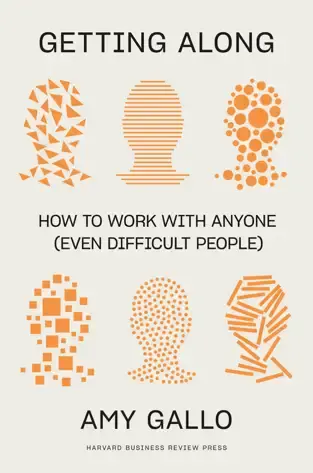
Getting Along examines the cost of strained workplace relationships. A passive-aggressive peer or insecure manager does not remain inside a meeting; we replay their words after work, assign motives, and lose focus and confidence. Amy Gallo does not promise to turn every colleague into a friend. She offers a way to understand difficult behavior, reduce its effect, and choose a response tied to a clear professional goal. Success may mean improved cooperation, but it may also mean a functional boundary that prevents the relationship from consuming energy needed elsewhere.
The work begins with examining our own contribution. This does not blame a target of misconduct or make every behavior equally responsible. It recognizes that we have more control over our interpretation and response than over another person's personality. Gallo asks what story we tell about the person, which observable facts support it, and which need feels threatened, such as respect, belonging, autonomy, or certainty. Separating observation from interpretation lowers reactivity. We then define the goal: completing a project, protecting reputation, stopping repeated interruption, or deciding that distance is the healthiest working arrangement.
The book organizes problems around eight rough archetypes, including passive-aggressive peers, pessimists, victims, know-it-alls, insecure bosses, tormentors, and biased coworkers. These are not diagnoses and should not imprison anyone in a label. Their purpose is to match an intervention to a behavior. Ambiguity is not handled like an explicit threat, and a pessimist does not need the same response as somebody who takes credit for others' work. People also behave differently under pressure and power, so an archetype remains a working hypothesis that evidence can revise.
Before a conversation, Gallo recommends calming the body and collecting specific examples. The message names what happened, its effect, and a future request instead of attacking character. Saying that a colleague interrupted before the figures were explained in two meetings and requesting two uninterrupted minutes gives them something answerable. Saying “you never respect me” opens an identity fight. Listening matters because the response may reveal a constraint that changes the solution. Listening, however, does not require accepting denial of observable events or abandoning the original concern.
Strategy then varies by pattern. With passive aggression, ask for clarity and record agreements. With a pessimist, turn broad objections into specific risks and alternatives. With an insecure manager, reduce surprises and show how work supports shared success without surrendering all autonomy. When bias or bullying appears, name the effect, preserve evidence, and seek witnesses, management, human resources, or other support. The point is not to discover one magical sentence. It is to expand the available moves: direct dialogue, process change, an ally, mediation, formal escalation, or a prepared exit.
The book also addresses recovery because a well-run conversation may not end rumination. Psychological distance, checking what remains unknown, speaking with a wise person who does not intensify anger, and returning attention to personal values can restore control. Gallo favors a small observable experiment over waiting for someone's whole personality to change. If a colleague honors one agreement, there is a base to build on. If the pattern continues after a clear request and suitable support, that outcome is information supporting stronger boundaries or escalation rather than proof of personal failure.
The strongest balance in Getting Along combines curiosity with self-protection. Understanding a manager's fear or a coworker's pressure may help, but empathy does not erase harm or release an organization from responsibility. Some cultures reward bad conduct, and some relationships cannot be repaired from a weak position. Safety, health, documentation, and qualified advice then matter more than surface harmony. Getting along does not mean liking everyone. It means choosing a conscious response that limits damage, preserves work and dignity, and recognizes when the relationship or environment itself must change.
Book and Author Information
Author: Amy Gallo, workplace dynamics expert and Harvard Business Review contributor.
Full title: Getting Along: How to Work with Anyone (Even Difficult People).
Published: Harvard Business Review Press, 2022.
Page count: 304 pages in the original English edition.
Main Ideas in the Book
Separate facts from story
Examine interpretation, threatened need, and goal before confronting the person.
Address behavior, not identity
Use a specific example, effect, and request instead of a character verdict.
Match strategy to pattern
Ambiguity, pessimism, bullying, and bias require different responses.
Protect yourself and escalate
Documentation, allies, boundaries, and exit are valid when dialogue fails.
Honest Review and Rating
Editorial rating: 4.3 out of 5. The guide is practical, nuanced, and rich in usable language without pretending every personality can be repaired.
Archetypes can simplify complex situations, and excellent communication cannot fix an institution that protects abusive conduct.
Frequently Asked Questions
1. Must I become friends with every coworker?
No. Functional cooperation or a boundary that limits harm may be a successful outcome.
2. Why examine my role when the other person is wrong?
To recover options you control, not to transfer blame or excuse misconduct.
3. How should I open a difficult conversation?
Describe specific behavior, its impact, and a concrete request, then listen to the response.
4. When should behavior be documented?
When it repeats, affects rights or evaluation, or involves bias, threat, or bullying.
5. When is leaving reasonable?
When harm persists after boundaries and escalation, or health and safety are at risk.
"Getting Along by Amy Gallo pdf": If it appears on the site in a way that violates copyright, please contact us immediately via the contact form or email to have it removed immediately out of respect for intellectual property rights. Call us: contact@market-books.com
Share the book with your friends


Getting Along by Amy Gallo pdf
Getting Along by Amy Gallo pdf مترجم
Getting Along by Amy Gallo pdf in french
Getting Along by Amy Gallo pdf en france
Getting Along by Amy Gallo pdf en français
Getting Along by Amy Gallo pdf بالفرنسية
Getting Along by Amy Gallo pdf in English
Getting Along by Amy Gallo pdf en anglais
Getting Along by Amy Gallo pdf بالإنجليزية
Getting Along by Amy Gallo pdf in Arabic
Getting Along by Amy Gallo pdf en arabe
Getting Along by Amy Gallo pdf بالعربية
Getting Along by Amy Gallo pdf in Arabic
Getting Along by Amy Gallo pdf in English
Getting Along by Amy Gallo pdf in french
Getting Along by Amy Gallo pdf in french For free
Getting Along by Amy Gallo pdf en france For free
Getting Along by Amy Gallo pdf en français For free
Getting Along by Amy Gallo pdf بالفرنسية For free
Getting Along by Amy Gallo pdf in English For free
Getting Along by Amy Gallo pdf en anglais For free
Getting Along by Amy Gallo pdf بالإنجليزية For free
Getting Along by Amy Gallo pdf in Arabic For free
Getting Along by Amy Gallo pdf en arabe For free
Getting Along by Amy Gallo pdf بالعربية For free
Getting Along by Amy Gallo pdf in Arabic For free
Getting Along by Amy Gallo pdf in English For free
Getting Along by Amy Gallo pdf in french For free
Books in the same category


Download a book Secrets of the Millionaire Mind pdf

Download a book Pharaohs thieves of civilization pdf






Download a book Act Like a Success Think Like a Success pdf



Download a book The Power of Your Subconscious pdf

Download a book Staying Strong: 365 Days a Year pdf




Download a book The Subtle Art of Not Giving a F*ck pdf








Download a book How to Sell Anything to Anybody pdf
















Download the book Full of Emptiness in PDF format

Download the book I Loved and Tomorrow in PDF format

Download the book Know Your Other Face in PDF format



















Never Again Will I Be Defeated PDF – Abdullah Mohammed Al-Turki