Summary Download a book The Psychology of Money pdf
Quotes from Download a book The Psychology of Money pdf
review Download a book The Psychology of Money pdf
The Psychology of Money Summary
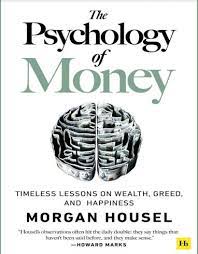
Morgan Housel begins with a practical claim: doing well with money depends less on advanced mathematics than on behavior maintained over time. A person can understand every financial formula and still make a destructive choice under fear, ego, or impatience. Another person with modest technical knowledge may build stability through saving, patience, and sensible risk. Financial outcomes happen in spreadsheets, but financial decisions happen in homes, workplaces, and stressful moments.
People also make decisions from different histories. One generation may remember inflation, another a long bull market, and another unemployment during a crisis. A choice that looks obvious to one person may feel reckless to someone shaped by another experience. Housel encourages readers to judge less quickly and to recognize that their own view is incomplete. A sound plan must fit the investor’s goals, time horizon, and genuine emotional ability to tolerate loss.
The book separates getting wealthy from staying wealthy. Building wealth may require optimism, concentration, and risk. Keeping it requires humility, room for error, and awareness that the future remains uncertain. Past success does not remove future danger. Someone who uses every gain to take a larger risk may lose the freedom the money was meant to create. Survival matters because compounding only works while the person remains in the game.
Compounding is central to Housel’s argument. Ordinary returns can create extraordinary results when they are allowed enough time. Warren Buffett’s record reflects skill, but also the unusually long period during which his capital could grow. This lesson favors starting early, avoiding catastrophic interruptions, and accepting a strategy that looks less exciting but can continue through different conditions. The longest uninterrupted process may matter more than the most impressive single year.
Saving does not need a specific purchase to be valuable. It buys flexibility: the ability to leave a harmful job, absorb a crisis, or act on an opportunity without immediate financial pressure. Visible wealth—cars, clothes, and houses—mostly shows money that has been spent. Wealth itself is often invisible because it consists of assets not yet converted into display. Defining what is “enough” protects the essential from being risked for a reward that no longer changes life meaningfully.
Housel finally prefers a reasonable plan to a perfectly rational one that a real person cannot maintain. The theoretically best portfolio is useless if its volatility causes panic selling. A durable plan includes a margin of safety, diversification, and expectations that allow for surprise. Money’s highest value is not only consumption or status. It is control over time—the ability to decide when, where, how, and with whom a person works and lives.
"Download a book The Psychology of Money pdf": If it appears on the site in a way that violates copyright, please contact us immediately via the contact form or email to have it removed immediately out of respect for intellectual property rights. Call us: contact@market-books.com
Share the book with your friends


Download a book The Psychology of Money pdf
Download a book The Psychology of Money pdf مترجم
Download a book The Psychology of Money pdf in french
Download a book The Psychology of Money pdf en france
Download a book The Psychology of Money pdf en français
Download a book The Psychology of Money pdf بالفرنسية
Download a book The Psychology of Money pdf in English
Download a book The Psychology of Money pdf en anglais
Download a book The Psychology of Money pdf بالإنجليزية
Download a book The Psychology of Money pdf in Arabic
Download a book The Psychology of Money pdf en arabe
Download a book The Psychology of Money pdf بالعربية
Download a book The Psychology of Money pdf in Arabic
Download a book The Psychology of Money pdf in English
Download a book The Psychology of Money pdf in french
Download a book The Psychology of Money pdf in french For free
Download a book The Psychology of Money pdf en france For free
Download a book The Psychology of Money pdf en français For free
Download a book The Psychology of Money pdf بالفرنسية For free
Download a book The Psychology of Money pdf in English For free
Download a book The Psychology of Money pdf en anglais For free
Download a book The Psychology of Money pdf بالإنجليزية For free
Download a book The Psychology of Money pdf in Arabic For free
Download a book The Psychology of Money pdf en arabe For free
Download a book The Psychology of Money pdf بالعربية For free
Download a book The Psychology of Money pdf in Arabic For free
Download a book The Psychology of Money pdf in English For free
Download a book The Psychology of Money pdf in french For free
Books in the same category


Download a book Secrets of the Millionaire Mind pdf

Download a book Pharaohs thieves of civilization pdf




Download a book Act Like a Success Think Like a Success pdf



Download a book The Power of Your Subconscious pdf

Download a book Staying Strong: 365 Days a Year pdf












Download a book How to Sell Anything to Anybody pdf



















Download the book Full of Emptiness in PDF format

Download the book I Loved and Tomorrow in PDF format

Download the book Know Your Other Face in PDF format






















Never Again Will I Be Defeated PDF – Abdullah Mohammed Al-Turki