Summary How to Win Friends and Influence People pdf
Quotes from How to Win Friends and Influence People pdf
review How to Win Friends and Influence People pdf
How to Win Friends and Influence People Summary
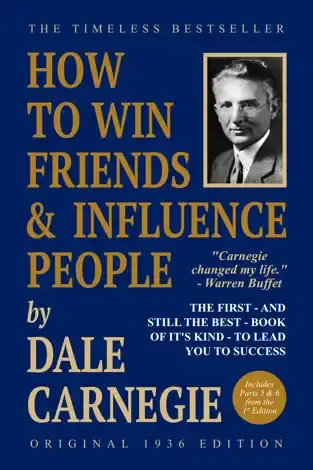
Dale Carnegie builds the book around a simple observation: relationships improve when people feel seen and respected, and deteriorate when we attack their dignity and then expect cooperation. The work is not a scientific theory of personality. It gathers memorable principles and stories for ordinary communication. Its opening principle discourages criticism, condemnation, and complaint as the only response because attack produces defense and justification. The alternative is not silence about mistakes. It is understanding motives and directing discussion toward behavior and a future that can change without humiliating the person.
A second principle is giving honest appreciation. Carnegie distinguishes appreciation from flattery: the first notices a real effort or effect and names it clearly, while the second manufactures praise to obtain an advantage. People want a sense of importance, but respecting them requires truth rather than vague compliments. He also advises arousing an eager want, meaning that a request should be explained from the other person's interests. A manager seeking adoption of a process is more persuasive when showing how it reduces mistakes and stress than when repeating that leadership wants compliance.
To become more likable, the book recommends genuine interest in others, an appropriate smile, remembering names, listening, talking in terms of their interests, and making them feel sincerely important. Its most famous advice is to be a good listener and encourage others to talk about themselves. Listening means follow-up questions, summaries, and attention rather than waiting for a turn. A name becomes irritating when repeated mechanically, and a smile cannot replace respect. The value lies in human curiosity, not copying social gestures as a formula for approval.
For persuasion, Carnegie begins by avoiding arguments whose purpose is victory. Even after losing on facts, a person may cling to an opinion to protect dignity. It is usually more useful to respect their view, avoid announcing “you are wrong,” admit one's own error quickly, and begin in a friendly way. The book also suggests finding agreement, letting the other person explain, looking from their perspective, and connecting an idea with their motives. These principles do not make every opinion accurate; they keep disagreement from becoming an identity battle.
The leadership section addresses correction without resentment. A leader starts with appreciation, calls attention to errors while allowing the person to save face, discusses personal mistakes before criticizing another, and asks questions instead of giving orders where choice exists. Small improvement deserves recognition, and a positive reputation can become something a person wants to fulfill. Kind packaging must not make the message ambiguous, however. Performance, safety, and rights require clarity about events, expectations, and consequences. Preserving dignity can coexist with accountability and firm boundaries.
One shift runs across the advice: move from “how can I make them do what I want?” toward “what matters to them, and where can mutual benefit exist?” Applied sincerely, this helps in customer service, interviews, teaching, and family life. Used as a checklist of tricks, it becomes visible manipulation. Remembering a name only to sell or giving praise immediately before a large request feels transactional. The ethical test is whether we will respect a refusal and the other person's interest, and whether appreciation would still be expressed without a direct reward.
The book has remained widely read since 1936 because respect and listening do not expire, and its anecdotes make principles easy to remember. The examples come from another era, however, and sometimes simplify power, bias, and harmful relationships. A reader prone to people-pleasing may also interpret it as a command to avoid conflict. A balanced application uses kindness and curiosity to strengthen candor rather than replace it: appreciate honestly, listen carefully, admit mistakes, and still name harm and enforce boundaries when circumstances require them.
Book and Author Information
Author: Dale Carnegie, American writer and lecturer on communication and self-development.
Full title: How to Win Friends and Influence People.
First published: 1936, followed by many revised and contemporary editions.
Page count: about 320 pages in a common Gallery Books English paperback; editions vary.
Main Ideas in the Book
Protect dignity
Reduce condemnation, understand motives, and address behavior clearly.
Appreciate without flattering
Name a real effort instead of manufacturing praise to gain an advantage.
Listen with genuine interest
Ask, follow up, summarize, and speak from the other person's interests.
Persuade without an identity battle
Begin warmly, admit error, seek agreement, and allow the other person to save face.
Honest Review and Rating
Editorial rating: 4.4 out of 5. Its principles remain memorable and useful for listening, appreciation, and reducing defensiveness in everyday relationships.
Stories are dated and sometimes simplified; superficial use becomes manipulation or people-pleasing unless joined with authenticity, power awareness, and boundaries.
Frequently Asked Questions
1. Does the book teach manipulation?
Its principles require sincere interest, although isolated techniques can certainly be misused.
2. How do appreciation and flattery differ?
Appreciation is specific and truthful; flattery is manufactured to obtain an advantage.
3. Does avoiding criticism mean ignoring errors?
No. It means discussing behavior and consequences without attacking the person's identity.
4. Why is listening so important?
It reveals interests, reduces defensiveness, and supports understanding before response.
5. Is the advice enough for an abusive relationship?
No. Threats and abuse require boundaries, protection, and possibly formal intervention.
"How to Win Friends and Influence People pdf": If it appears on the site in a way that violates copyright, please contact us immediately via the contact form or email to have it removed immediately out of respect for intellectual property rights. Call us: contact@market-books.com
Share the book with your friends


How to Win Friends and Influence People pdf
How to Win Friends and Influence People pdf مترجم
How to Win Friends and Influence People pdf in french
How to Win Friends and Influence People pdf en france
How to Win Friends and Influence People pdf en français
How to Win Friends and Influence People pdf بالفرنسية
How to Win Friends and Influence People pdf in English
How to Win Friends and Influence People pdf en anglais
How to Win Friends and Influence People pdf بالإنجليزية
How to Win Friends and Influence People pdf in Arabic
How to Win Friends and Influence People pdf en arabe
How to Win Friends and Influence People pdf بالعربية
How to Win Friends and Influence People pdf in Arabic
How to Win Friends and Influence People pdf in English
How to Win Friends and Influence People pdf in french
How to Win Friends and Influence People pdf in french For free
How to Win Friends and Influence People pdf en france For free
How to Win Friends and Influence People pdf en français For free
How to Win Friends and Influence People pdf بالفرنسية For free
How to Win Friends and Influence People pdf in English For free
How to Win Friends and Influence People pdf en anglais For free
How to Win Friends and Influence People pdf بالإنجليزية For free
How to Win Friends and Influence People pdf in Arabic For free
How to Win Friends and Influence People pdf en arabe For free
How to Win Friends and Influence People pdf بالعربية For free
How to Win Friends and Influence People pdf in Arabic For free
How to Win Friends and Influence People pdf in English For free
How to Win Friends and Influence People pdf in french For free
Books in the same category


Download a book Secrets of the Millionaire Mind pdf

Download a book Pharaohs thieves of civilization pdf




Download a book Act Like a Success Think Like a Success pdf



Download a book The Power of Your Subconscious pdf

Download a book Staying Strong: 365 Days a Year pdf




Download a book The Subtle Art of Not Giving a F*ck pdf








Download a book How to Sell Anything to Anybody pdf















Download the book Full of Emptiness in PDF format

Download the book I Loved and Tomorrow in PDF format

Download the book Know Your Other Face in PDF format


















Never Again Will I Be Defeated PDF – Abdullah Mohammed Al-Turki