Tiny Experiments: try the action before making a bigger promise
Wanting to read more can lead to an impressive annual target before you have worked out when reading fits your day. Tiny Experiments by Anne-Laure Le Cunff offers a different starting point: what manageable action could help you learn about your circumstances? The interesting distinction is not between ambition and laziness. It is between a distant result you hope for and an activity you can actually begin, observe and reconsider.
This analytical introduction uses the publishers’ records and the author’s official resources. It does not claim to reproduce every chapter. The example and critical comparisons below are our own: a way to examine the premise without inventing a story from the book or treating an individual exercise as scientific proof.
From a fixed verdict to a useful question
An experimental approach asks what an action reveals, not simply whether it fulfils a promise made in advance. That can matter when you are exploring an unfamiliar interest or habit. It does not make existing responsibilities disappear. A contractual deadline still needs a realistic plan; relabelling it as exploration does not remove consequences for other people. The value of the approach depends on the uncertainty and flexibility of the situation.
What does PACT mean?
Le Cunff explains PACT as Purposeful, Actionable, Continuous and Trackable. The emphasis is on meaningful, feasible repeated action with a straightforward record. Tracking need not become an elaborate dashboard. Knowing whether an activity happened can sometimes reveal more than spending the available time designing a sophisticated measurement system.
Our editorial caution is to separate continuity from stubbornness. An experiment needs an opportunity for review, otherwise “still experimenting” can become a way of postponing a decision. Smallness is not automatically useful either. The activity should illuminate a real question rather than merely provide the comforting sensation of doing something.
An original example: ten minutes of reading after lunch
Suppose a reader wants to know whether this time slot fits their working week. In our illustration, they try ten minutes on five working days and leave a book within reach. They record whether they started and what helped or interrupted them. We do not prescribe a page target or suggest that five days guarantees a lasting habit.
At the end, three sessions happened and two were displaced by meetings. The reader can try another time, shorten the session or keep what worked. This observation is not a judgment about personal worth or evidence for a universal rule. Its value is in identifying an obstacle more precisely than “I lack discipline.” The author’s Plus Minus Next reflection can extend the review: what helped, what did not and what to try next.
How it differs from Slow Productivity
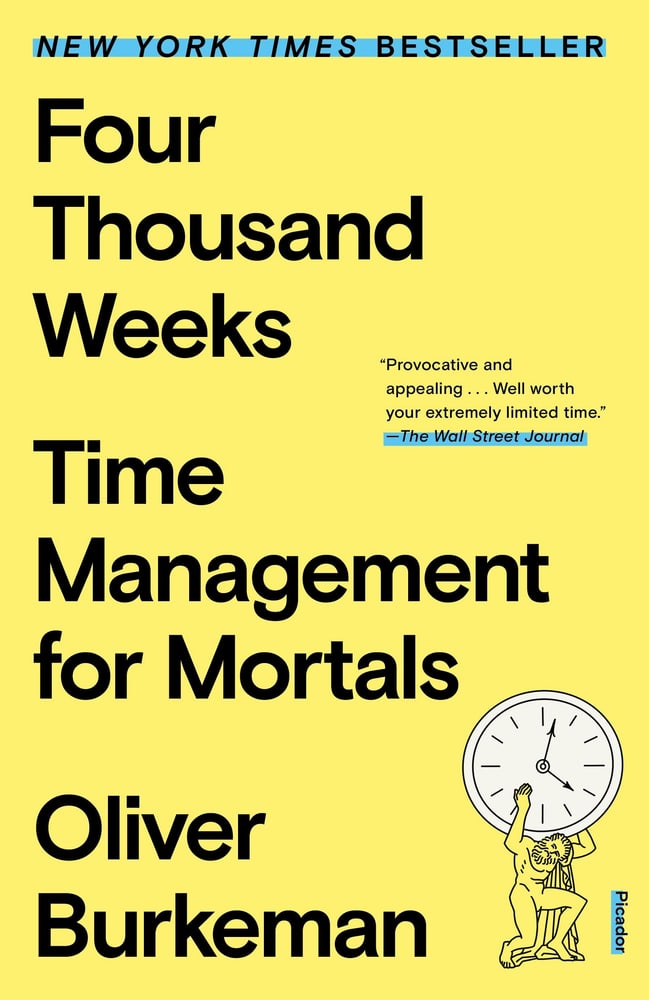
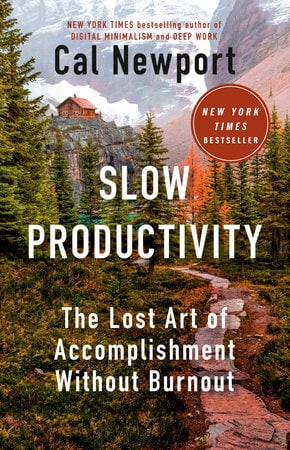
A comparison with Cal Newport’s Slow Productivity helps clarify the reading choice. Our editorial distinction is between designing an exploratory activity and organising the pace of knowledge work. The questions can complement each other without making the books interchangeable. You might test a reading slot and still need to reduce the number of projects competing for it. Oliver Burkeman’s Four Thousand Weeks raises another question: which commitments deserve your limited time in the first place?
What a personal experiment cannot establish
A few observations are not a controlled study. Fatigue, workload and changing circumstances may explain a result. Constant experimentation can also become a polished form of distraction when every week brings another fresh start without reflection. And a manageable trial cannot erase financial pressure, caring responsibilities or rigid working conditions. A useful reading keeps those constraints visible rather than turning every difficulty into an individual failure.
This is also why the book should be approached as an invitation to think and act differently, not as a promise that curiosity will cure distress or make every project succeed. Readers remain free to stop, adjust or decide that a particular experiment is not worth continuing.
Checked editions
The Avery hardcover was published on 4 March 2025: 304 pages, ISBN 9780593715130. The French paperback, Petites expériences pour vivre en grand, appeared with Eyrolles on 6 November 2025: 268 pages, ISBN 9782416012655. We did not verify an Arabic edition. The Arabic page is therefore an editorial introduction to the English book, with an explanatory Arabic title and the English cover.
Five reader questions
Does the book mean abandoning every goal?
No. Learning under uncertainty is different from ignoring useful deadlines or commitments that other people depend on.
What makes an experiment useful?
A clear question, an observable action and a chance to review what happened. A tiny action alone does not guarantee useful information.
Is the reading example from Le Cunff’s book?
No. It is our original illustration, not an attributed anecdote or a validated protocol with a promised outcome.
Why is the Arabic page using an English cover?
We have not verified an Arabic edition. Translating our commentary does not establish that the book itself has been translated.
Who might benefit from this reading angle?
Someone exploring a practice or project and willing to reconsider assumptions. It is not a substitute for qualified care or a success guarantee.
Checked references : English publisher and edition · Author’s discussion guide · Author’s explanation of PACT · Plus Minus Next reflection · French publisher Eyrolles