


Summary A General History of Morocco by Abdallah Laroui pdf
Quotes from A General History of Morocco by Abdallah Laroui pdf
review A General History of Morocco by Abdallah Laroui pdf
Book summary: A General History of Morocco
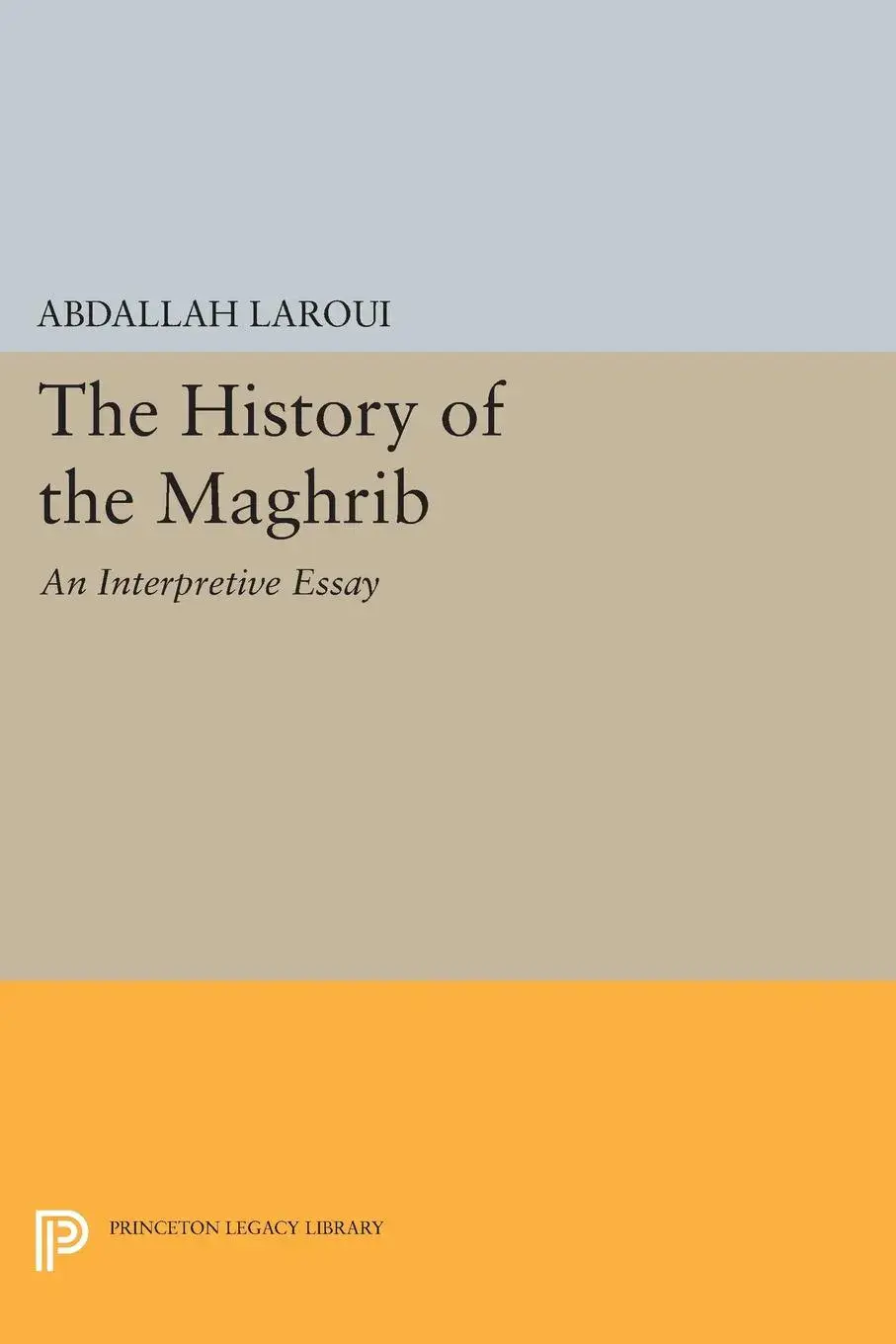
Abdallah Laroui does not present Moroccan history as a sequence of rulers and battles alone. He builds a synthesis connecting territory, population, tribe, state, economy, and Mediterranean and Saharan relations. “Morocco” cannot be easily separated from the wider Maghreb or networks beyond the present state’s borders. The book therefore begins with long-term structures before political events. It criticizes colonial narratives that described the region as static until Europe arrived, while also criticizing narrow nationalism that reads all earlier history as an inevitable march toward the current national form.
The book asks how central authority formed and negotiated or fought with local forces. A state requires taxation, military power, roads, legitimacy, scholars, and cities, while tribes, religious lodges, and distant regions possess resources and loyalties of their own. The relationship is not a simple binary between a strong makhzen and chaos. Power shifts with trade, climate, technology, and alliances. Across dynasties, Laroui tracks continuity and rupture and warns against projecting modern national and administrative ideas onto periods when borders and sovereignty worked differently.
Morocco’s position between the Mediterranean, al-Andalus, sub-Saharan Africa, and the eastern Islamic world is central. Trade, migration, religion, and war move people, ideas, and wealth, so transformation cannot be explained internally alone. Islamization, Arabization, and Amazigh-Arab relations are treated as long processes rather than one event. These subjects now require newer archaeological and social research, but the book’s value lies in synthesis and resistance to a single identity that erases the others.
Approaching the modern era and colonial rule, Laroui rejects both pure “internal backwardness” and European force alone as explanations. International balance, economics, religion, armies, reform, and domestic conflicts interacted. Colonialism also produced archives and classifications designed to govern. Such sources must be read critically rather than rejected wholesale or accepted at face value. National history after independence must avoid automatic celebration as well; the historian’s task is explaining transformation and contradiction, not manufacturing a comfortable myth.
The book is dense, and its huge scope makes some judgments broad. Historiography has changed since the work was written in the early 1970s. It is not the final word or a substitute for newer studies of Amazigh history, women, local economies, and archaeology. It remains foundational for learning a method: define concepts, period, scale, and source; compare local and regional processes; and distinguish identity memory from a historical explanation that accepts complexity and revision.
A clearer view of “A General History of Morocco” emerges when the summary is organized around four connected themes: «History is structure and relationship», «Do not project the present backward», «Morocco belongs to networks», «Read archives critically». In theme 1, Territory, economy, society, and state matter beyond ruler chronology. In theme 2, Borders, sovereignty, and identity change across periods. In theme 3, Mediterranean, Saharan, Andalusian, and eastern connections shape change. In theme 4, Colonial sources contain information and the ruling categories of their producers. These themes are not isolated rules. They are lenses for understanding the argument, the characters’ movement, and the consequences the work asks readers to consider. While reading, it helps to record the central claim in each part, the example supporting it, and the question still unanswered, then compare those notes with personal experience or an independent source whenever historical or scientific facts are involved. This prevents an attractive phrase from becoming a universal truth and separates what the author actually states from what the reader infers. With a practical nonfiction book, one idea can be tested for a week, with results and obstacles recorded before the method is adjusted; trying everything at once makes evaluation impossible. With fiction, the equivalent test is to track changes in character, the narrator’s reliability, and whether the ending answers the tensions the plot created. A final three-sentence note—main insight, strongest objection, and one action or question worth pursuing—makes the reading easier to retain without exaggerating the book’s promises or dismissing its value. The book then becomes the beginning of a revisable conversation shaped by context, goals, and edition, not a closed recipe or a collection of quotations.
Book and author information
Author: Abdallah Laroui, a Moroccan historian, thinker, and novelist.
Scope: a broad historical synthesis of Morocco and the Maghreb, based on work first written in the early 1970s.
Cited edition: Arab Cultural Center, Casablanca, 2009.
Length: 696 pages; other editions differ.
Key ideas
History is structure and relationship
Territory, economy, society, and state matter beyond ruler chronology.
Do not project the present backward
Borders, sovereignty, and identity change across periods.
Morocco belongs to networks
Mediterranean, Saharan, Andalusian, and eastern connections shape change.
Read archives critically
Colonial sources contain information and the ruling categories of their producers.
Review and rating
Editorial rating: 4.6 / 5.
A major synthesis that expands attention from event to structure and from the present nation to regional history.
Its density and scope require newer specialized supplements. It is a foundational starting point, not the only source.
Frequently asked questions
1. Is the book only a chronology?
No. It analyzes state, society, territory, economy, and regional connections.
2. Is it suitable for beginners?
Yes with slow reading, a map, a timeline, and a shorter introductory history nearby.
3. Why do page counts differ?
The work has appeared in different editions, formats, and volumes.
4. Does it address Amazigh history?
It does within a synthesis, but newer specialized research is needed for a fuller view.
5. Is there an official English edition?
This page describes the cited Arabic edition; verify the specific translation before purchase.
"A General History of Morocco by Abdallah Laroui pdf ": If it appears on the site in a way that violates copyright, please contact us immediately via the contact form or email to have it removed immediately out of respect for intellectual property rights. Call us: contact@market-books.com
Share the book with your friends


A General History of Morocco by Abdallah Laroui pdf
A General History of Morocco by Abdallah Laroui pdf مترجم
A General History of Morocco by Abdallah Laroui pdf in french
A General History of Morocco by Abdallah Laroui pdf en france
A General History of Morocco by Abdallah Laroui pdf en français
A General History of Morocco by Abdallah Laroui pdf بالفرنسية
A General History of Morocco by Abdallah Laroui pdf in English
A General History of Morocco by Abdallah Laroui pdf en anglais
A General History of Morocco by Abdallah Laroui pdf بالإنجليزية
A General History of Morocco by Abdallah Laroui pdf in Arabic
A General History of Morocco by Abdallah Laroui pdf en arabe
A General History of Morocco by Abdallah Laroui pdf بالعربية
A General History of Morocco by Abdallah Laroui pdf in Arabic
A General History of Morocco by Abdallah Laroui pdf in English
A General History of Morocco by Abdallah Laroui pdf in french
A General History of Morocco by Abdallah Laroui pdf in french For free
A General History of Morocco by Abdallah Laroui pdf en france For free
A General History of Morocco by Abdallah Laroui pdf en français For free
A General History of Morocco by Abdallah Laroui pdf بالفرنسية For free
A General History of Morocco by Abdallah Laroui pdf in English For free
A General History of Morocco by Abdallah Laroui pdf en anglais For free
A General History of Morocco by Abdallah Laroui pdf بالإنجليزية For free
A General History of Morocco by Abdallah Laroui pdf in Arabic For free
A General History of Morocco by Abdallah Laroui pdf en arabe For free
A General History of Morocco by Abdallah Laroui pdf بالعربية For free
A General History of Morocco by Abdallah Laroui pdf in Arabic For free
A General History of Morocco by Abdallah Laroui pdf in English For free
A General History of Morocco by Abdallah Laroui pdf in french For free
Books in the same category
Download the book of enjoyment and companionship by Abu Hayyan al-Tawhidi pdf


A General History of Morocco by Abdallah Laroui pdf


