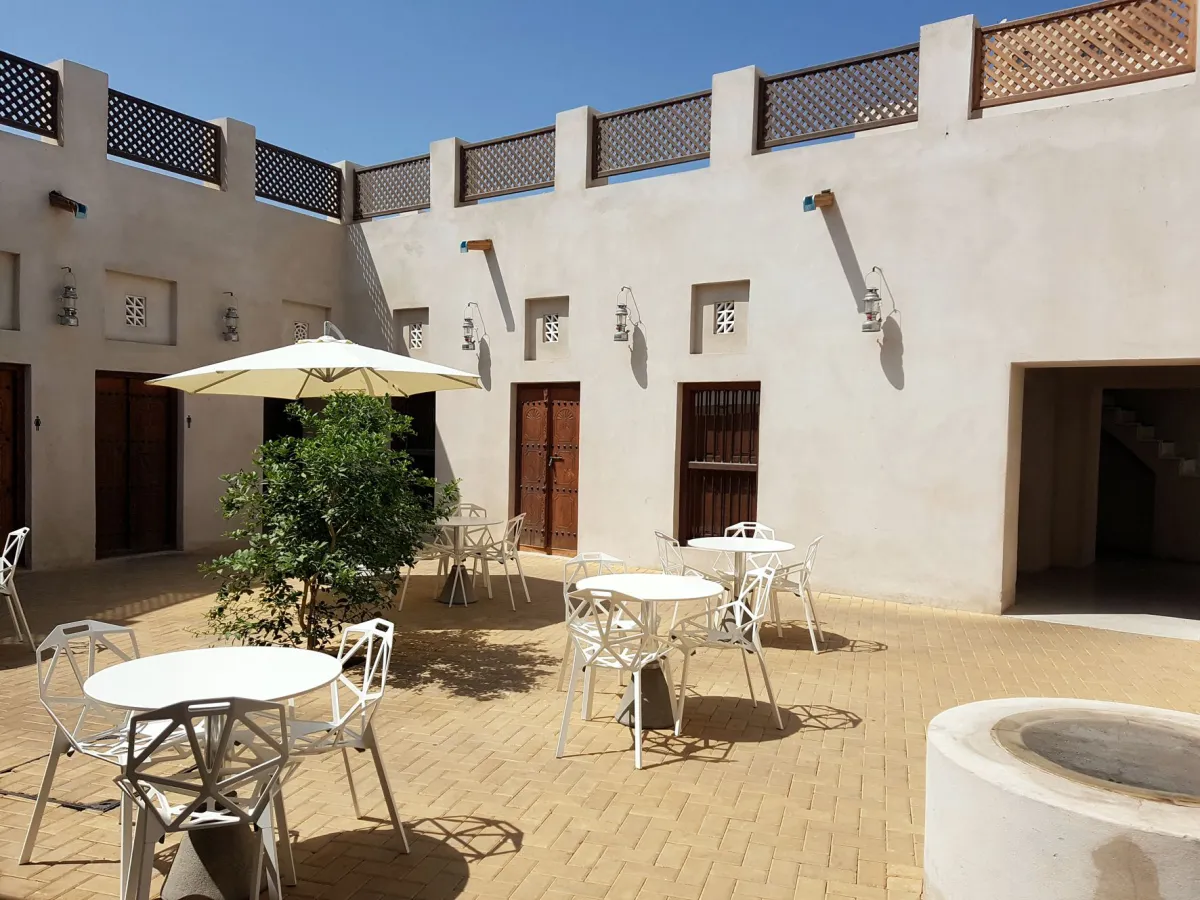
The Sharjah Architecture Triennial organiser’s announcement lists a press day on 13 November 2026 and schedules the third edition’s opening for 14 November. Its title, Architecture Otherwise, provides a starting point for thinking about shared places. This is a programme-led analysis, not an exhibition review or confirmation of what happened on site.
A striking image is not a complete account
An architectural photograph may impress while hiding the walk to the nearest seat or the lack of shade at a particular hour. Reading public space therefore begins with delaying the verdict. Before describing a place as successful or unsuccessful, ask exactly what you observed, from where, and at what time.
This does not remove personal taste. It makes taste easier to discuss. An open square may feel generous to someone crossing it quickly and uncomfortable to someone waiting there. Those reactions refer to different uses, not necessarily to a disagreement about the same experience. Separating them turns a broad aesthetic argument into a more useful question about conditions.
Start with a three-page notebook
Use the first page for movement. Sketch a simple route from the entrance to a destination and mark places where orientation becomes uncertain. Do not follow or identify individual passers-by. You are not producing a technical survey; you are asking whether the place explains itself or assumes knowledge that a visitor may not possess.
On the second page, record opportunities to remain: seating, shade and room for conversation. Distinguish visible features from conclusions you cannot verify. Seeing a ramp does not establish that an entire route is accessible. Keep the final page for questions: who might feel unwelcome, and what should be asked of users rather than assumed on their behalf?
Read the programme critically too
The edition’s cultural documentation supplies its framework and dates. Words such as collective or community still need to be tested against particular decisions. Does sharing happen in making the work, using it, discussing it, or all three? Promotional vocabulary is an invitation to investigate, not evidence that the question has been settled.
When writing about a project, try a clear sequence: describe one detail, offer an interpretation, and state an unresolved question. Do not invent a designer’s intention. Do not turn an organiser’s description into a personal memory. Returning to the explanatory text after observing a place can reveal what it adds and what remains open to disagreement.
Why this belongs in a reader’s notebook
A field note resembles a useful annotation in a book: it connects an idea with a detail and challenges an overly general response. A reading group could select a short text about cities, then take its questions to a nearby library or square. The purpose is not to make every place fit a theory. It is to discover where reading helps and where other people’s experience complicates it.
This method does not require a trip to Sharjah or a claim to have reviewed the Triennial. Returning to a familiar place at another hour can change the routes, the light and the reasons for staying. Anyone planning a visit should separately confirm the current programme and access arrangements with the organiser. Careful observation begins with practical accuracy as well as an open question.