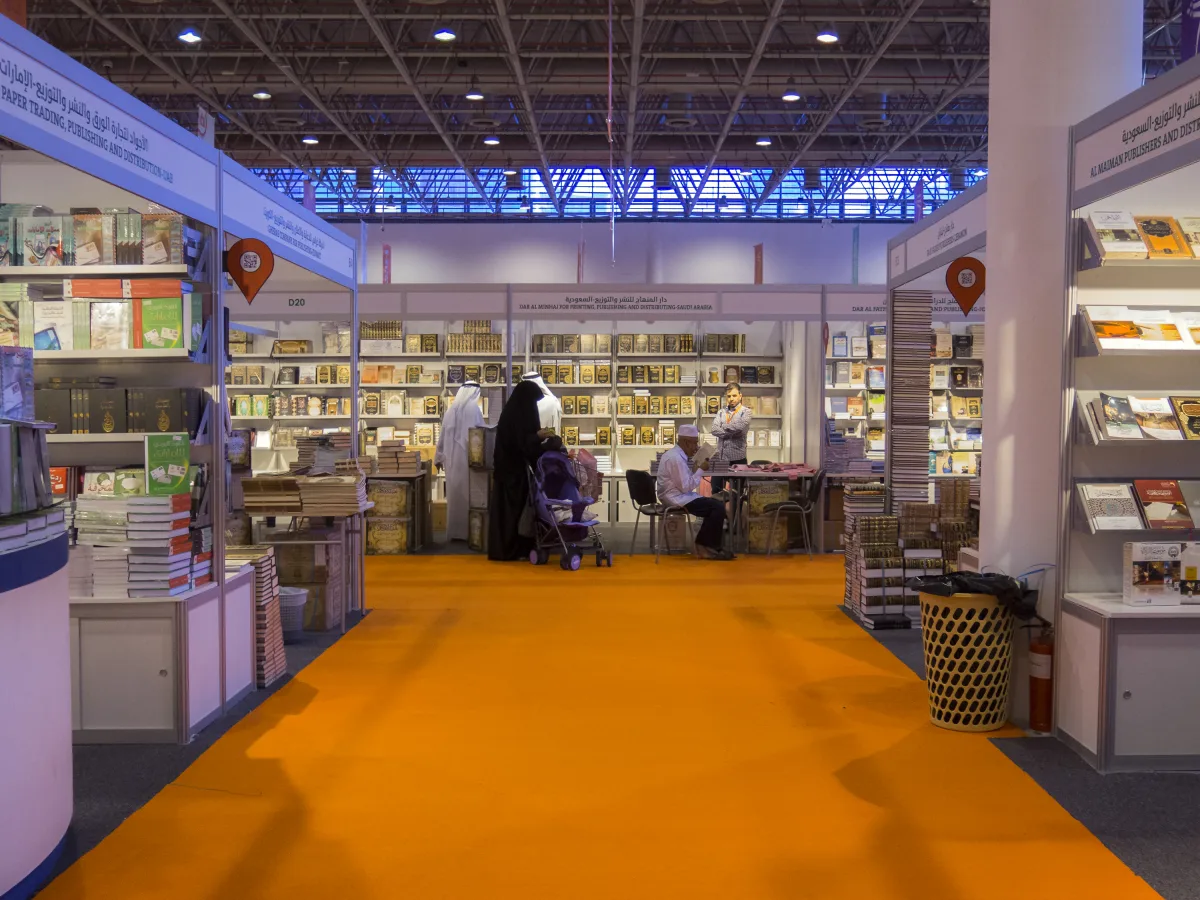
As of 13 November 2026, the Sharjah International Book Fair is an ongoing event, not a newly announced opening. The fair’s official website and the UAE National Media Authority give the same dates: 4–15 November at Expo Centre Sharjah. The useful question now concerns the remaining days and what readers might carry forward after the exhibition closes.
The confirmed event and its separate timelines
In its report published on 3 November, Emirates News Agency, WAM, described the forty-fifth edition, organised by the Sharjah Book Authority under the theme “Made of Stories”, with Oman as Guest of Honour. The visitor page separately lists the Publishers Conference for 1–3 November and the library conference for 7–9 November. Those professional gatherings should not be presented as opportunities still ahead.
The National Media Authority describes a programme bringing together authors and publishing professionals through discussions, workshops and signings. That description is not, by itself, evidence of improved reading habits. It does establish a broader setting than a sales floor: a fair can also be a place to ask how books are made and how ideas travel.
Analysis: abundance is not the same as discovery
Seeing many titles does not automatically mean encountering many ideas. A visit can be consumed by comparing covers or finding familiar names. Giving curiosity a direction may be more useful than making a long shopping list. Is the aim to understand a problem, encounter an unfamiliar narrative form or hear a voice from a less familiar setting? With a question in mind, exhibition stands become a research route rather than a sequence of stops.
Oman’s presence as Guest of Honour can be approached as an invitation to explore diversity within a culture, rather than find one person who represents it completely. A single writer does not stand for an entire society, and heritage narratives do not exhaust contemporary literature. Comparing generations, or reading a literary work alongside a historical account, helps readers ask who is speaking, to whom and from which experience. This is a suggested approach, not a finding about what every visitor has done.
Look at the translation as well as the cover
With a translated work, the translator’s name, original language and publication date matter. Books that appear similar in subject may emerge from very different circumstances. A thoughtful introduction or set of notes can make that distance easier to understand. Missing information is a reason to ask a publisher, rather than assume every edition offers the same reading experience.
The fair’s conversational setting makes such questions possible. Beyond price, readers can ask which text was used, whether a translation is complete and who the edition was designed for. No single answer guarantees quality. Together, however, these questions support a more informed choice. They also reveal cultural exchange as editorial and interpretive work, not merely the substitution of words from one language for another.
A modest plan for choosing books
One possible route has three intentions: a book addressing a present question, one opening an unexpected door and one suitable for shared discussion. These need not all become purchases. Looking through a contents page, recording the details and later finding a lawful library loan or an affordable edition can be enough. What matters is retaining the reason for a choice after the excitement has passed.
It can also be worth making room for a book whose position is unfamiliar or unconvincing. Understanding an argument is different from accepting it. After reading an introduction, ask what the author proposes and what evidence will need examination. This creates an intellectual task for the reading, instead of letting the writer’s reputation settle the question in advance.
What begins after 15 November?
The more revealing test comes in the following weeks: has a book been started, a question sharpened or an assumption reconsidered? A small reading group could bring together contrasting choices and ask each participant what differed from their expectations. It need not produce a final review or complete agreement. Comparing ways of understanding may be its most valuable result.
A fair’s cultural value can therefore be sought in the conversation that survives it, not only photographs and purchases. The organiser’s current programme remains the place to check specific remaining activities. This article offers a reading framework, not a booking guide or an eyewitness account. The event supplies an occasion; the slower work of cultural understanding continues with the reader.