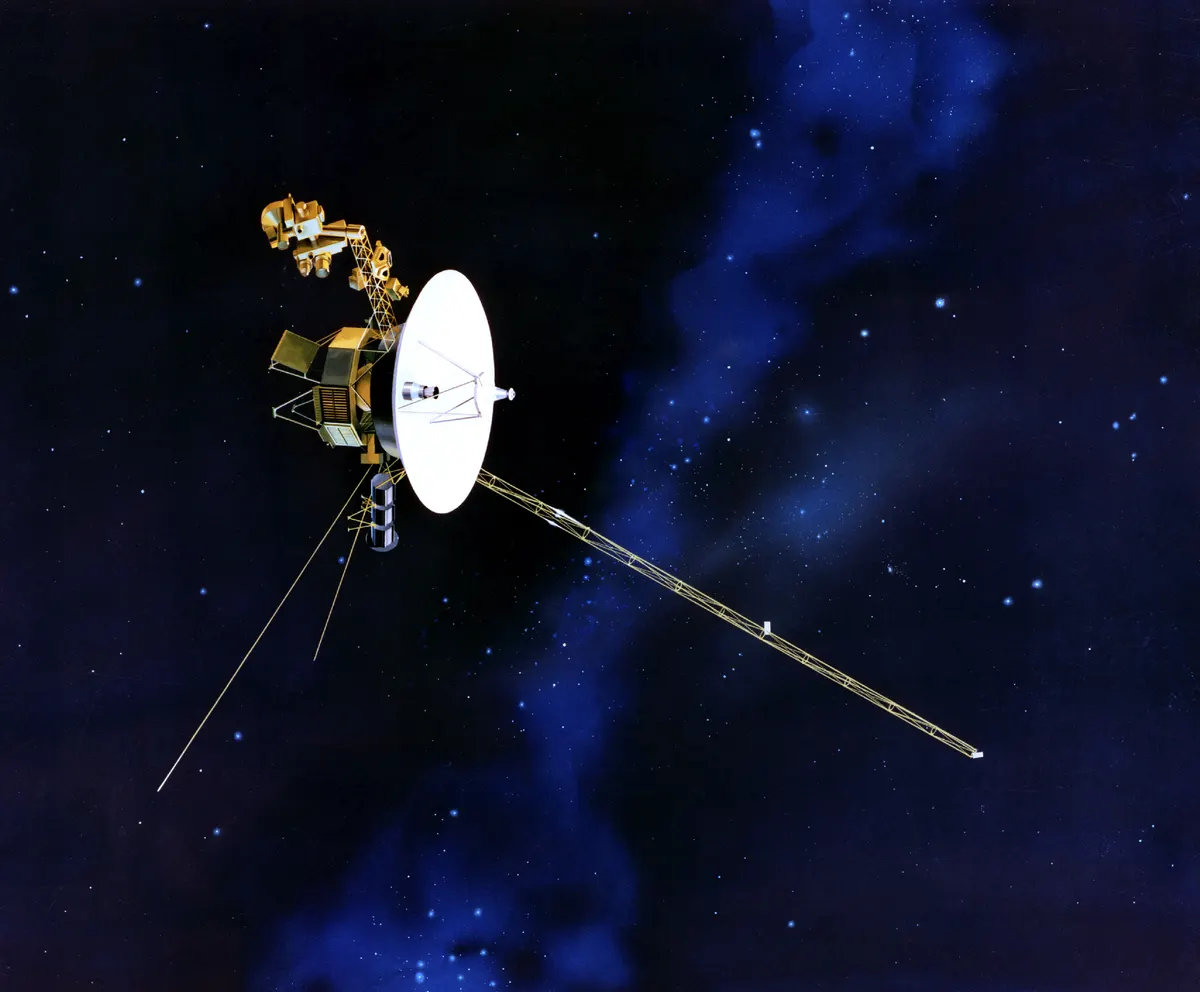
In a November 18, 2026 update, NASA reported receiving Voyager 1’s carrier signal but not its science or engineering data. Alongside preparations to confirm a one-light-day distance, that can sound contradictory: how can a spacecraft be heard without its information arriving? The distinction is between a transmission’s presence and its usable contents.
This explanation is anchored to that dated update. It does not announce a later repair or claim that data have resumed. Mission status can change, and NASA’s source remains the place to check subsequent developments.
An open channel is not a readable message
As an analogy, imagine a telephone connection whose presence you can detect without understanding any words. That is not a technical account of the spacecraft’s electronics. It simply separates detecting a broadcast from recovering meaningful information. The statement “a signal arrived” is therefore insufficient to establish that every part of a mission is operating normally.
When reading a technical report, look for the exact name of what arrived: a signal, operating data or scientific measurements. Changing one noun can change a headline’s meaning. Likewise, identifying a suspected cause is not the same as proving it or having a repair ready.
A light-day is a distance, not a journey time
A light-day is the distance light travels in twenty-four hours. Communication across that distance takes about a day in one direction. Sending an instruction and receiving a subsequent response requires at least the outward and return travel times, plus processing and communication arrangements.
It does not mean Voyager made its journey in one day. Draw two arrows on paper: an instruction leaving Earth, then a signal returning. This simple picture explains why diagnosing a distant spacecraft cannot resemble an instant conversation with technical support.
Read the boundaries of the knowledge
Separate what was observed, what engineers infer, and what remains under investigation. A similar incident in the past does not automatically establish the same cause today. Nor does a historic distance milestone turn an operating problem into either complete success or final failure.
Keep the update’s date beside your notes, then carry one question into the next report: has the content returned, or has only the signal been confirmed? That habit makes space news more rewarding than a race between dramatic headlines. It follows how knowledge is built, instead of allowing an impressive word to stand in for an explanation.