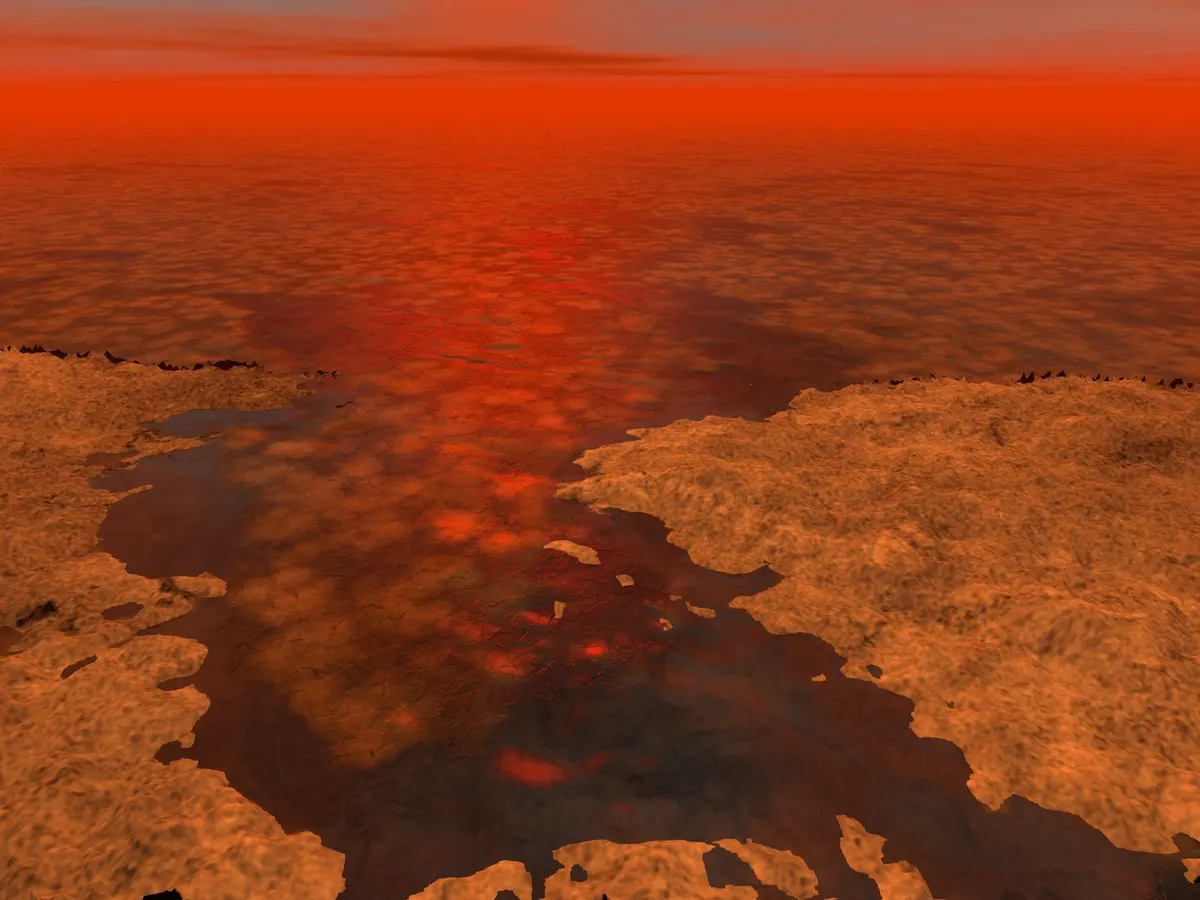
A study published in Frontiers in Astronomy and Space Sciences on November 23, 2026 examines machine learning on mass-spectrometry data from laboratory compounds relevant to Dragonfly’s Titan mission. These are not new samples from the moon, and the authors say the models are not ready for flight data.
This is neither life detection nor a system recognising every possible substance. It offers a way to understand when a test result might transfer beyond familiar examples.
Recognising examples does not cover every possibility
A model may succeed on cases resembling its training material and struggle when the cases change. How data are divided matters alongside the final score. Closely related examples on both sides of training and testing make it important to ask what was actually evaluated.
An educational analogy from our editors is a pupil memorising familiar solutions. A high mark does not guarantee success when a problem is reframed. That does not make all learning worthless; it calls for a test suited to the intended use.
A single score hides several questions
What is the task: recognising a broad chemical family or identifying a specific substance? Are the cases entirely new? What does an error mean? A result on a limited question cannot automatically become a promise to handle everything a system might encounter.
For chemical data, collection conditions and the instrument also belong to the problem. A number does not carry that context with it. Readers need to know what counts as a correct answer and under which circumstances.
An acknowledged limit is part of progress
Saying a model is not ready for its next use is not a detail to delete for excitement. It marks the distance between a promising experiment and an appropriately reliable tool. Keeping that distinction makes developments easier to follow honestly.
For the next AI announcement, record three things: the data, the task and what remained outside the test. That small checklist helps prevent “learning to recognise within an experiment” from becoming “understanding an entire world”, whether the subject is a distant moon or a tool on a phone.