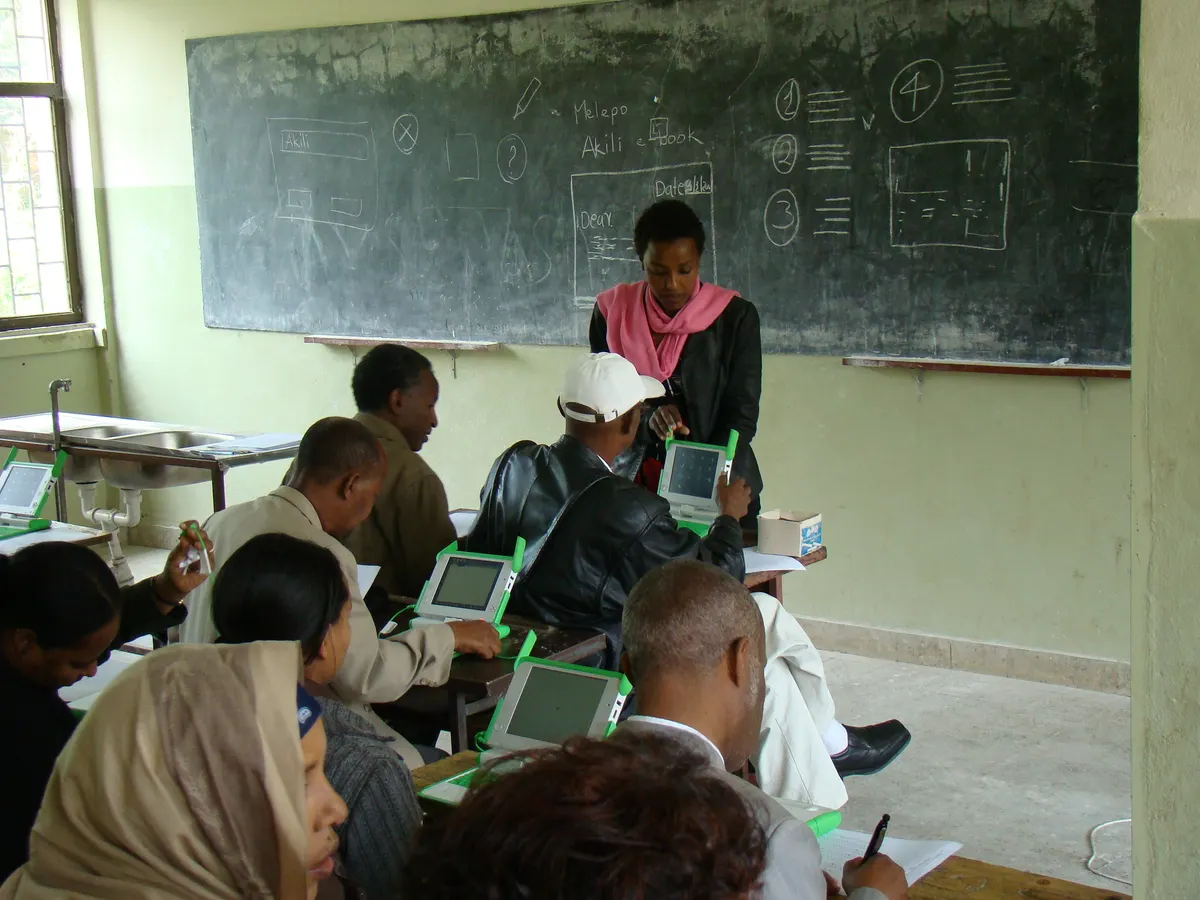
UNESCO and the International Task Force on Teachers launched a new global report in Addis Ababa on November 23, 2026. It argues for professional development as a teacher’s right. Its summary says only 45% of countries with complete data require it across every level from pre-primary to secondary education.
That denominator matters: the figure is not a judgement on every country or teacher. The document offers education-policy recommendations, not a newly binding universal law or an experiment proving that a particular workshop will automatically improve pupils’ results.
A certificate cannot tell the whole learning story
For professional reading, distinguish attending an activity from using an idea. A training folder may contain excellent material, but when can its recipient read it? Who will discuss what happened when an approach did not work as expected in that person’s classroom?
These questions should not become personal accusations. Reviewing and experimenting require workable conditions. For families or school visitors, asking about available support is more precise than reducing the issue to the number of certificates an individual teacher has collected.
An imagined reading-lesson example
Suppose colleagues struggle to get pupils to explain their answers about a story. They might choose one question, read a relevant short text and each try a limited adjustment. At the next meeting, they could compare anonymised responses rather than expose children’s identities or rank teachers.
This is our editorial illustration of follow-up, not a programme reproduced from the report or a promised outcome. Discussion might reveal an unclear question, a text unsuited to the task or a need for more thinking time. Its value would lie in identifying what to reconsider, rather than announcing success in advance.
Read a recommendation without turning it into a recipe
Start with the scope of an indicator, then separate a finding from a proposal. Ask what differs in the institution you know. A modern-sounding label or an international publisher is not enough reason to transfer a solution from one setting to another.
The story matters to book readers too: professional knowledge needs time to select a text, understand it, discuss it and return to it. What deserves attention next is whether institutions make that possible in practice, not an assumption that launching the report itself has solved the problem.