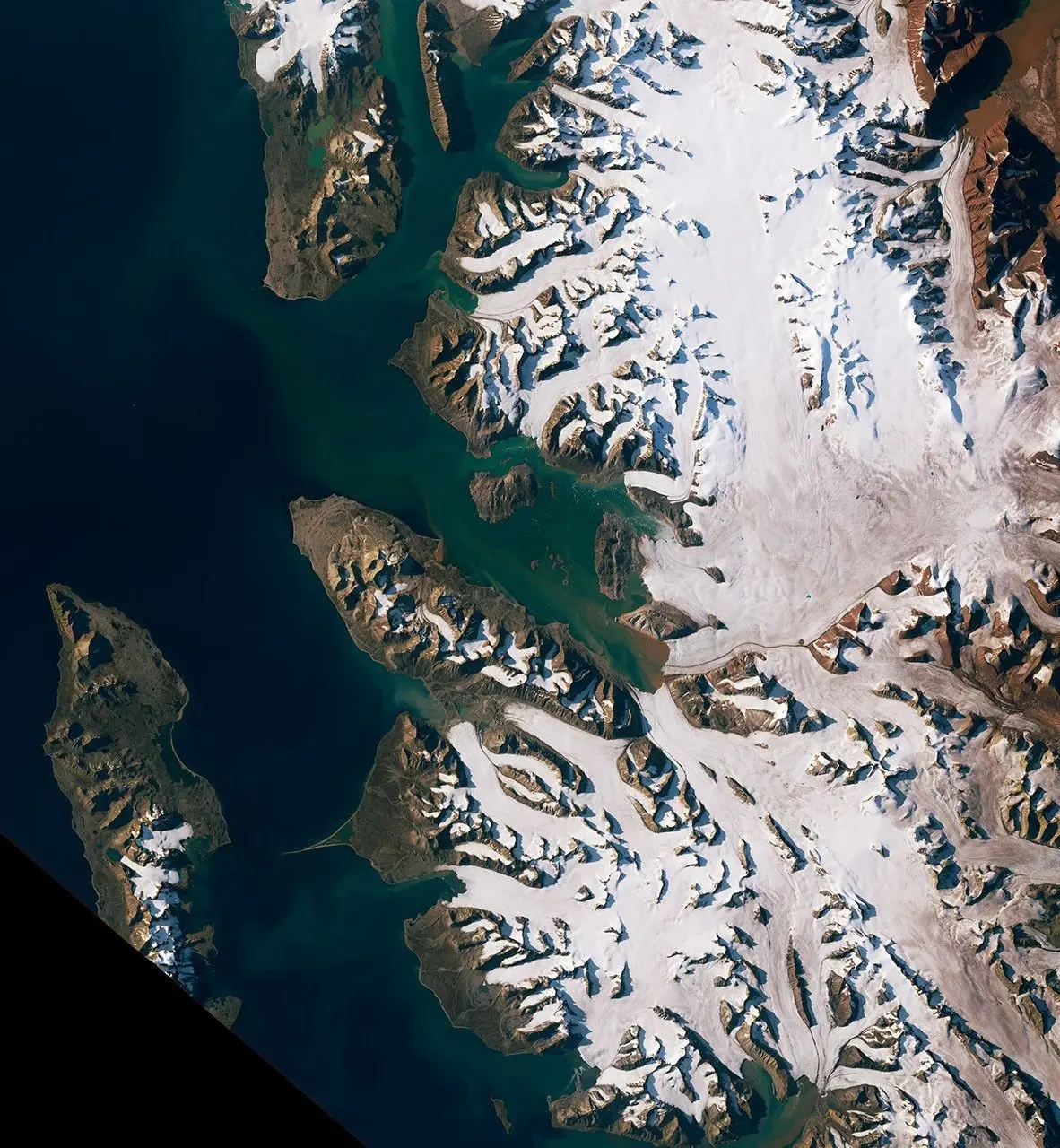
NASA published a feature on a next-generation satellite laser-ranging system in Svalbard on November 23, 2026. Its official debut was on October 12: today’s development is the explanation, not an installation this morning. It prompts a question behind everyday maps: what reference gives coordinates their meaning?
An image can show many details without explaining how its position connects to another measurement. Seeing something and locating it comparably are different achievements.
Light’s travel time informs distance
The broad principle involves sending a pulse and observing its return from a suitable reflector. Travel time contributes to a distance calculation. “Precise” does not mean that uncertainty has disappeared or that every satellite observation uses this same method.
As an analogy, a good ruler is not enough if two people start measuring from different origins. This is not a literal account of the observatory’s equipment. It illustrates why definitions and calibration matter alongside the instrument producing a number.
The reference is part of the result
Comparing places or dates requires knowing what remains common in the calculation. A small difference might represent real change or a difference in measurement practice. An attractive colour map cannot settle that distinction on its own.
Ask about units, dates, data sources and the reference used. Those details are not merely technical decoration. They allow numbers to be placed together without assuming they describe precisely the same thing.
Read an instrument announcement carefully
Separate what a device does from conclusions scientists may reach after collection and checking. Introducing a new system does not automatically rewrite all previous findings. Nor does a photograph of the equipment display its measurements.
Keep one question for the next report: what can now be compared differently or more effectively? The story becomes an entry into the knowledge behind a map, rather than simply admiration for a beam of light or a large number without context.