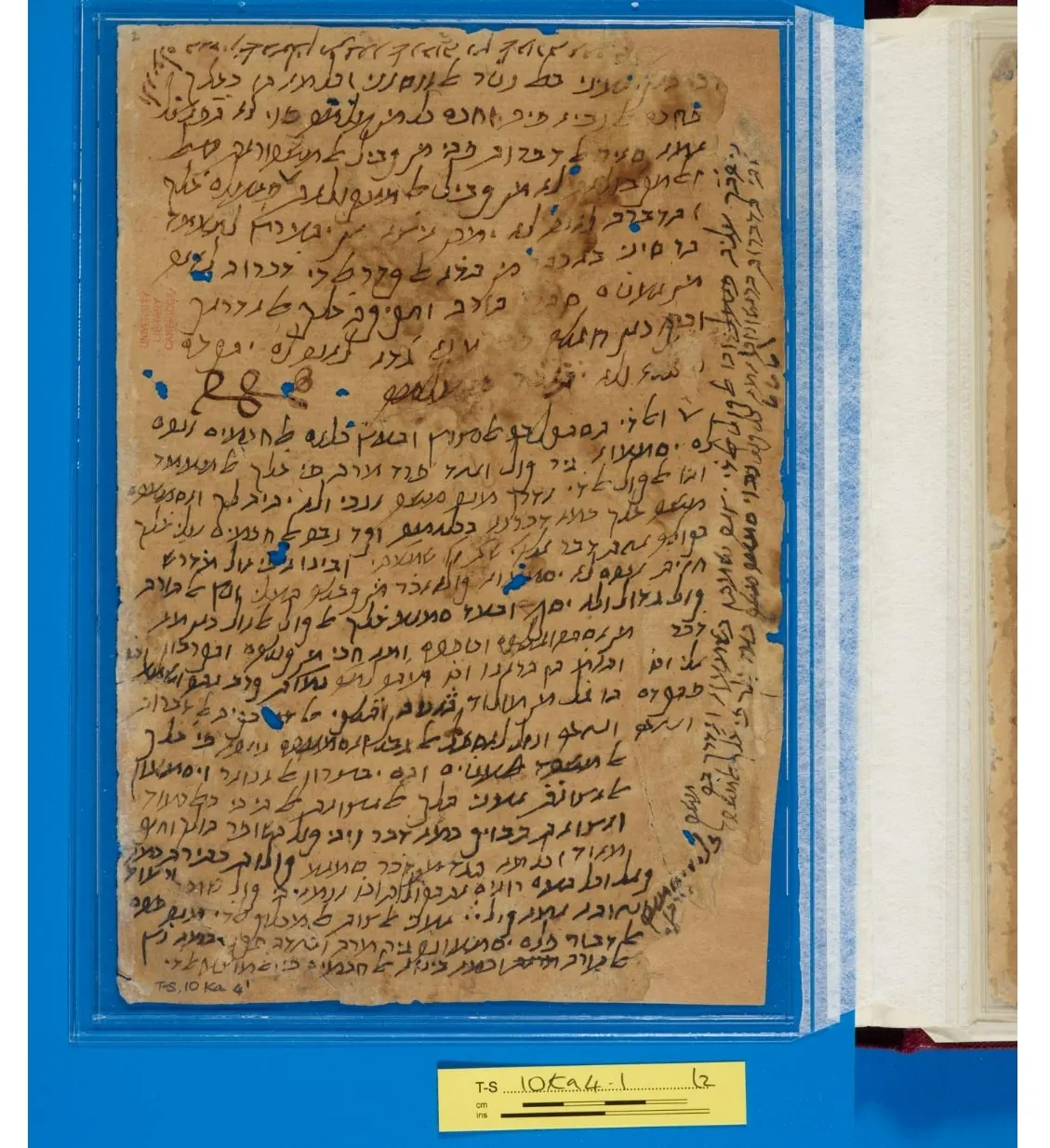
ICESCO published a report on 24 November 2026 about Ahmed Chahlane’s lecture, held the previous day in Rabat, on Arabic books in Hebrew script. We use the occasion for an introductory reading exercise, not to announce a discovery or assess particular manuscripts.
Ask about language and script separately
Recognizing letter shapes does not necessarily identify the language of a sentence. Write a familiar Arabic expression using Latin characters: its visual representation changes without automatically becoming English. This deliberately simple teaching example separates two questions: what language is being used, and what writing system represents it? Keeping them apart makes a catalogue description easier to approach.
A further question concerns editorial work. Representing characters in another alphabet is different from explaining meaning in another language. A publication might place a facsimile beside a transcription and a translation. Before quoting, establish which layer you are reading and who prepared it. The appearance of print alone does not tell us how directly a passage corresponds to the underlying document.
Try an imaginary catalogue card
Consider a training example, not a real historical object: uncertain title, Arabic language, Hebrew script and unknown copyist. Leave the unknown fields open. A medical term would not establish the copyist’s profession; a place named in a sentence would not necessarily identify where the volume was copied. Attractive guesses remain guesses even when they fit a plausible story.
We suggest adding a confidence column. Does an entry come from a catalogue, your observation of the image or a hypothesis requiring specialist help? This prevents assumptions becoming firmer simply through repetition. Several dates also require several questions: composition, copying and digital photography concern different stages. Their coexistence need not mean the record contradicts itself.
Begin without pretending to decipher everything
Where two descriptions of the same object exist, compare them and investigate one difference. You can ask what a shelfmark means without translating the entire page. Equally, an attractive photograph does not confer expertise in dating paper or identifying a handwriting style. Useful beginner work includes recording precisely where your understanding stops.
These are our editorial suggestions, not a detailed account of the lecture’s arguments. A historical page used as an illustration demonstrates a writing practice; it does not document what was displayed at the meeting. The larger invitation is to slow down classification: before assigning a book one cultural identity, ask how it was written, transmitted and described.