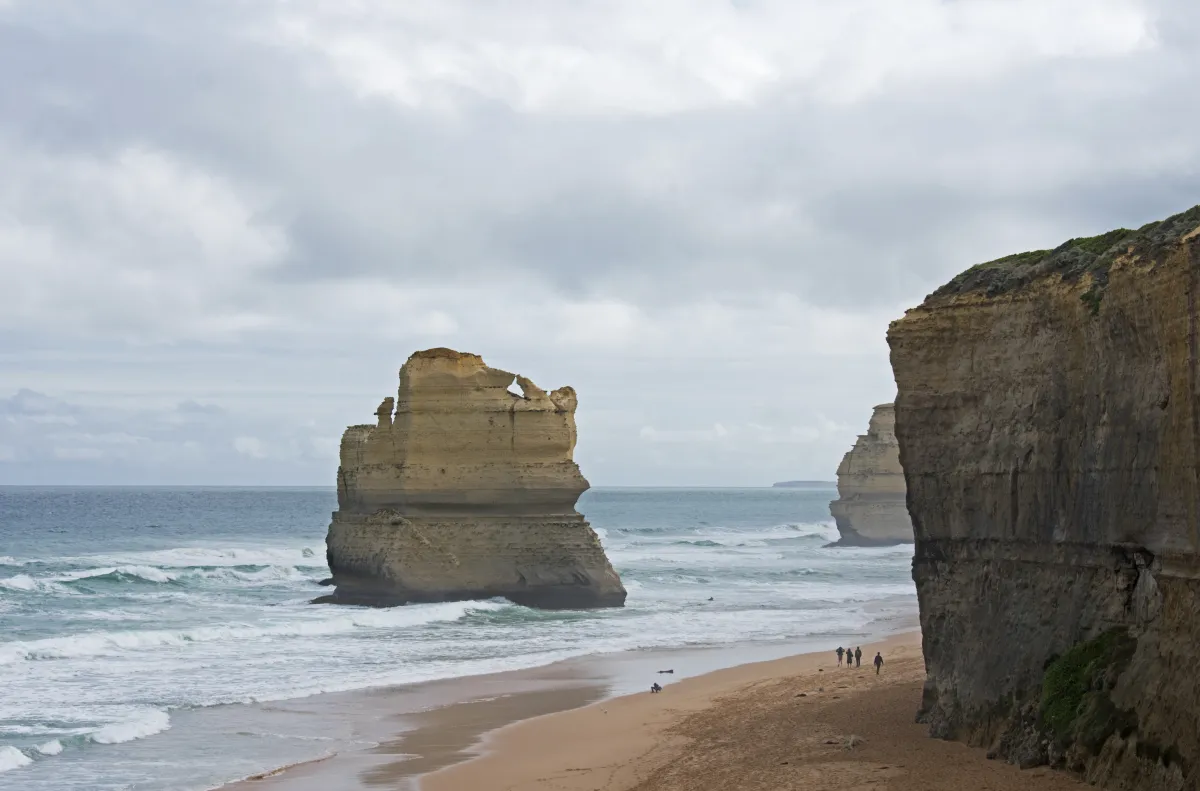
Al Shorouk reported on 12 November 2026 a Mansoura discussion of Ghada Labib's « تحت سطح العالم.. ستون يوماً في أستراليا ». The new development is the event, not the book's publication. The publisher's bookshop record confirms its title and author.
The occasion opens a question that extends beyond one work: what do we seek in someone else's journey? A travel narrative need not replace a current map or booking information. Nor should a visitor's account be treated as a final description of an entire country. The following is a reading approach, not a review claiming access to every page of this particular book.
Separate the traveller's question from the tourist's question
A practical guide answers questions about routes, prices, opening times and access. A narrative may focus instead on what unsettles its narrator: a brief encounter, a detail in a street or a gap between an earlier image and a new experience. If we require the second kind of book to do only the first kind of work, its real purpose can disappear.
Before starting, identify your expectation: to learn about a place, accompany a voice or consider the relationship between familiarity and distance? These wishes can overlap without becoming identical. You remain free not to enjoy a narrative style. A useful response explains that reaction through what the writing does, rather than through a different book you hoped it would become.
Listen to a visitor without making them speak for a country
Every journey has a position: available time, languages understood, ways of moving and people it was possible to meet. When a broad claim appears, ask whether it comes from direct observation, a conversation or subsequent research. Those are different forms of knowledge. Keeping them distinct need not diminish either the account's literary appeal or the sincerity of its perspective.
Where a narrative touches a community's history or shared memory, another voice becomes important. Material produced by the people concerned, or a carefully documented study, can complement a visitor's view. The aim is not to erase the traveller's surprise. It is to recognise its human scale rather than asking one perspective to contain a whole society.
Notice the detail that changes a question
Do more than collect landmark names in a reading notebook. Record a scene that alters an earlier expectation: why does the narrator stop there, what connections are made, and what remains outside the frame? Such questions expose the movement from description to interpretation. A place on the page is also a way of looking, shaped by memory, language and selection.
Comparing passages by two travellers about the same location can be useful without appointing a winner. What does each notice, and what falls outside each person's interests? A difference is not immediate proof that one writer is dishonest and the other possesses the entire truth. First examine the kind of claim being made and the limits attached to it.
Keep factual information open to checking
Mark details that require updating and separate them from impressions presented as personal. A transport timetable may change, while a scene of uncertainty in an unfamiliar place can retain its interest. This prevents us from reducing literature to a service directory without excusing information that presents itself as factual from ordinary verification.
The strongest outcome is not a ready-made list of conclusions about the truth of Australia. It is better-positioned curiosity: questions whose sources we understand, a wish to encounter additional voices and attention to details beyond familiar tourist imagery. A book discussion may be yesterday's news, but the reading habit it prompts can travel with us into the next narrative, wherever it leads.