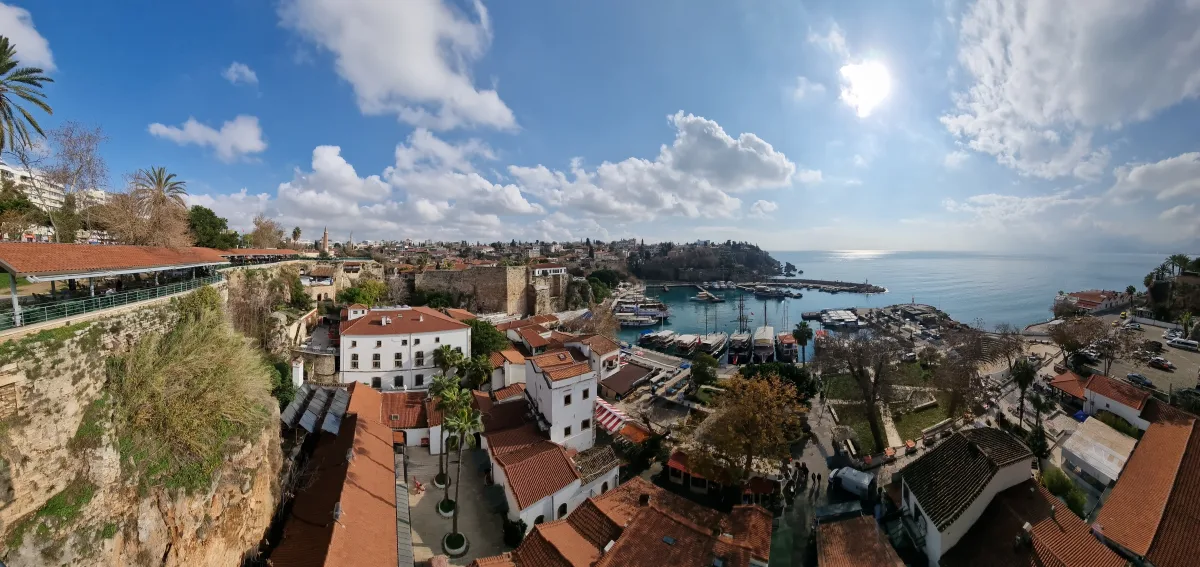
The UN Climate Change Conference COP31 is taking place in Antalya from 9 to 20 November 2026, according to its official website and the UNFCCC participant guide. As of 13 November, the conference is still underway. A proposal, statement or scheduled activity should therefore not be presented as the final agreement of a completed meeting.
Where reading meets climate news
The conference website separates documents, meetings and news. UNESCO’s education programme lists a Greening Education Partnership meeting for 13–14 November and also publishes a programme on climate information integrity. These are published schedules: they do not establish that every session has occurred or that its discussions have become negotiated decisions.
More broadly, the UNFCCC’s Action for Climate Empowerment brings together education, training, awareness, access to information, participation and cooperation. Knowledge is connected with the ability to participate, not merely the ability to recognise conference vocabulary. Our analysis begins there: how can readers follow changing news without depending on the fastest headline or most dramatic phrase?
Analysis: three kinds of text do different work
The first is a negotiating document. Before its content, check who issued it, at which stage and on what date. A proposal, draft and adopted decision are not interchangeable when summarising a discussion. Keeping the link and version matters too: an accurate quotation from an older text can mislead if it is represented as the current position.
The second is scientific explanation. The IPCC offers resources from its Synthesis Report released on 20 March 2023, including a summary and a longer report. Its date is part of understanding the source, not an automatic reason to dismiss it because a meeting report is newer. A scientific assessment and political news answer different questions: one builds background knowledge, while the other follows a changing process.
The third is a human account: a memoir, novel or testimony that explores relationships with place, work, memory and loss. Such writing does not replace measurement, but it raises questions about whose voices are heard and whose are missing. Equally, one moving experience cannot justify a conclusion about a whole country. Cultural understanding needs both empathy and evidence without expecting either to do the other’s job.
Two terms worth slowing down for
In IPCC terminology, mitigation concerns reducing greenhouse gas emissions or increasing their removal. Adaptation concerns adjusting to climate and its effects to moderate harm in human systems. The distinction helps readers ask whether a proposal addresses causes or preparedness for consequences. Some projects combine these dimensions, so the proposed action matters more than a word in a headline.
There is no need to master every acronym immediately. A short vocabulary page tied to one question can help: a sourced definition and an example distinguishing it from a neighbouring term. The purpose is not collecting terminology, but reducing the chance that a familiar-sounding word distorts the interpretation of an entire argument.
A quieter way to follow the conference
A realistic beginning is to choose one subject, such as education, water or reliable information, rather than attempt to absorb every session. Compare the available official text, an accessible explanation and the question still unanswered. If a headline announces an agreement, look for the supporting document, its date and the body that adopted it, not the number of times the headline has been shared.
A reading group or classroom can test this approach on one resource without pretending to reproduce the entire negotiating process. One person clarifies terms, another traces the source and another asks who is affected and who can participate. This is a suggested educational exercise, not an account of an activity witnessed in Antalya.
After the conference
Evaluating what follows will still require distinguishing an adopted text, an implementation plan and a measured result. Careful reading does not mean postponing judgment forever; it means asking for the right evidence for each claim. For a publication concerned with books, this is the connection between COP31 and knowledge: turning an event into a learning process that can be checked, rather than a passing metaphor or a premature announcement that a complex crisis has been solved.