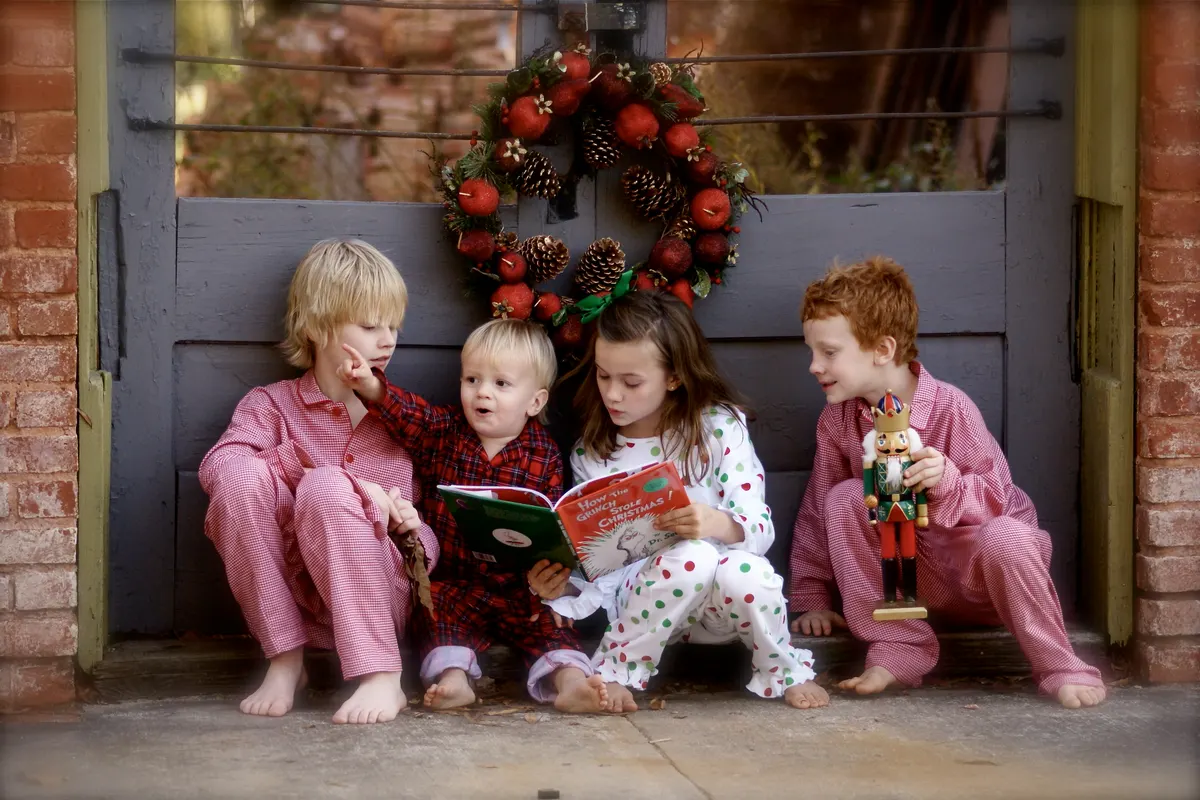
On November 19, 2026, the King Salman Global Academy for Arabic Language held its third Child Language Forum in Riyadh, focusing on institutional initiative. The announcement also invites a smaller, everyday question: what happens when a child and an adult open a book together?
The suggestions here are our editorial response, not recommendations attributed to speakers whose full proceedings we have not reviewed. They are not a tool for assessing language development. The aim is to protect the conversation that a story can make possible.
Let the story arrive before the questions
Stopping after every sentence to check vocabulary can make the thread of a story disappear. Try reading a short passage without interruption, then let the child choose what to notice: a face in the illustration, something funny, or a detail the adult missed. A brief silence can be time for looking rather than evidence that the session has failed.
Alongside a factual question such as “What did the character say?”, offer a more open invitation: “If you were there, what would you look at?”. The answer need not match a prepared summary. Adults can also admit uncertainty when an illustration or action supports more than one interpretation.
Choose a book you can actually share
A striking cover is only a beginning. Look at two pages before choosing: does the text sound natural aloud? Do the pictures leave something to discover? Can the action be followed without a long explanation at every turn? These are practical questions about this particular reading experience, not a universal ranking of children’s literature.
In a multilingual household, comparing a word or a character’s name can become part of the conversation without requiring a translation of every line. A changed name is not, by itself, proof of a translation error; checking edition information may be necessary before reaching that conclusion.
What libraries can make easier
A library can describe the experience a book offers: an illustrated story to explore, a narrative to discuss, or a text for reading together. Concrete descriptions are more useful than promises of measurable improvement after a few sessions. Families need to know what they are choosing.
After reading, keep one question the child asked or one page they wanted to revisit. Begin there next time. That small record becomes a bridge to another book rather than a scorecard. Shared reading then remains a relationship built through attention and repetition, not an assignment that ends when the final page is turned.